Portable Air Conditioner How to Install

Install a portable air conditioner by placing it near a window, attaching the exhaust hose, and sealing the window opening tightly. In the San Fernando Valley, the best results come from matching the unit to the room, keeping the hose short, and blocking afternoon heat.
If you’re trying to figure out portable air conditioner how to install, the good news is that most setups are straightforward once you match the unit to the room and seal the window properly. In the San Fernando Valley, where late-afternoon heat can hang around well into the evening, a clean install matters just as much as the AC’s cooling power.
This guide walks SFV renters, homeowners, and anyone cooling a bedroom, garage office, patio room, or apartment through the basics. If you want a better sense of the machine itself before setting it up, it also helps to understand portable air conditioner how it works so you can avoid common installation mistakes.
- Size matters: Match BTUs to the room and Valley heat exposure.
- Seal tightly: Window gaps can undo a good installation fast.
- Keep it short: A short, straight exhaust hose cools better.
- Plan drainage: Long summer runs may need a drain setup.
- Use shading: Curtains and fans help the AC work less.
Portable Air Conditioner How to Install: A San Fernando Valley Homeowner’s Quick Start
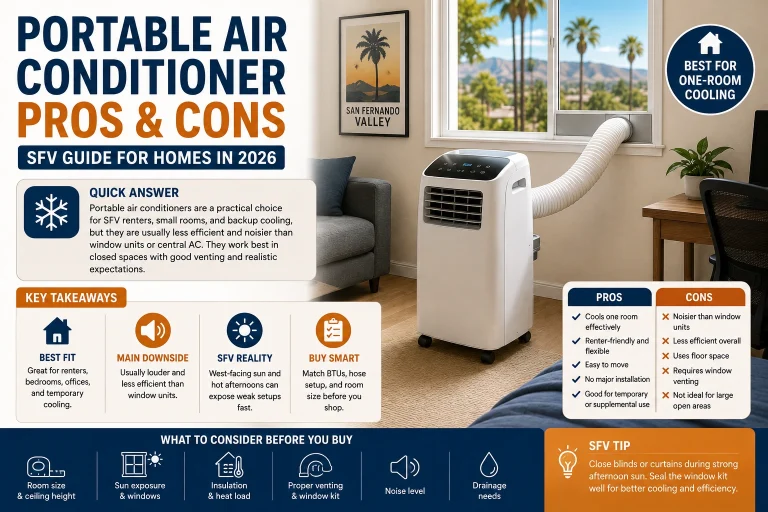
Portable AC installation is mostly about three things: proper sizing, a tight window seal, and smart placement. Get those right, and the unit has a much better chance of keeping up during a Valley heat wave without running nonstop.
Why SFV heat waves make portable AC setup more urgent in 2026
The San Fernando Valley gets long, dry, sun-heavy stretches that can turn a small room into an oven by late afternoon. That means a portable AC isn’t just a comfort upgrade; for many people, it’s a practical backup when central air is weak, unavailable, or too expensive to run all day.
In 2026, more SFV households are also using portable ACs for temporary cooling in converted spaces, home offices, and rooms that don’t get good airflow. The faster you install it correctly, the sooner you can take pressure off the room before the heat builds up.
What this guide helps readers do: cool a bedroom, garage, patio office, or apartment fast
This article is built for real-world SFV living: apartments with sliding windows, bedrooms that face west, garage conversions, and small homes where one hot room throws off the whole house. The goal is to help you set up the unit safely and efficiently the first time.
If you’re a renter, commuter, parent, or work-from-home resident, you’ll also find tips for temporary setups and shared spaces. That matters here because a lot of Valley homes need flexible cooling, not just permanent installs.
Before You Begin: Choose the Right Portable AC for Your SFV Space
Before opening the box, make sure the unit actually fits the room. In the Valley, the wrong size can mean either weak cooling or a machine that cycles badly and wastes energy.
BTU sizing for Valley apartments, ADUs, bedrooms, and converted garages
BTU sizing should match both the room size and the heat load. A shaded bedroom with decent insulation is very different from a sun-baked upstairs room or a garage conversion with thin walls.
Budget models are usually best for smaller rooms or occasional use, mid-range units are a better fit for everyday bedrooms and offices, and premium models make more sense when you need quieter operation or better performance in tougher spaces. If you’re unsure, it’s usually safer to avoid undersizing in the SFV, where heat gain can be relentless.
- Room size and ceiling height
- Sun exposure and insulation quality
- Whether the room has a door you can close
- How often you’ll run the AC
Single-hose vs dual-hose models for hotter inland homes
Single-hose units are common and easier to set up, but they can be less efficient because they pull air from the room to vent heat outside. Dual-hose units usually perform better in hotter inland conditions because they manage intake and exhaust more effectively.
For a mild bedroom or occasional use, a single-hose model may be fine. For a west-facing room, an upstairs space, or a garage office in the Valley, dual-hose often makes more sense if your budget allows.
| Option | Best For | Note |
|---|---|---|
| Single-hose | Smaller rooms, simple installs | Usually easier to move, but less efficient in extreme heat |
| Dual-hose | Hotter rooms, longer daily use | Often better cooling performance in SFV conditions |
Features that matter in SFV life: dehumidify mode, quiet operation, smart controls, and window kit quality
Even though the Valley is dry compared with coastal areas, dehumidify mode can still help during muggy monsoon-like stretches or in rooms that trap moisture. Quiet operation matters too, especially for bedrooms, nurseries, and apartment walls that seem thinner than they should be.
Smart controls are convenient if you want to cool a room before you get home from work, but don’t overlook the window kit. A flimsy kit can leak hot air and dust, which is a bad combo when the Santa Ana winds or smoggy conditions make indoor air feel stale.
A higher price does not automatically mean a better installation. In many SFV homes, window fit and sealing quality matter more than extra features you may rarely use.
What You Need for a Clean Installation
You do not need a contractor for a typical portable AC setup, but you do need a few basics ready before you start. A clean install saves time and reduces the chance of leaks, rattles, or warm air sneaking back in.
Window type check: sliding, double-hung, or vertical opening
Start by checking what kind of window you have. Most portable AC kits are designed for sliding windows or double-hung windows, and some units need an adapter or extra panel for unusual openings.
If you live in a condo, apartment, or older SFV house, don’t assume the included kit will fit perfectly. Measure the width and height of the opening before you begin so you’re not stuck improvising with cardboard or tape.
Tools and supplies: measuring tape, weather stripping, vent kit, and extension considerations
At minimum, have a measuring tape, the included vent kit, and weather stripping or foam seal material. A screwdriver may help, and a level can be useful if the unit needs to sit evenly.
Extension cords are a separate issue. If you can avoid one, do so; if you must use one, make sure it is rated for the unit’s electrical load and kept clear of foot traffic. In busy family homes, that’s not a small detail.
Do not run a portable AC through a weak extension cord or overloaded outlet. Heat, vibration, and long run times can create unnecessary safety risks in older homes and apartment setups.
Safety and placement basics for homes with kids, pets, or tight walkways
Place the unit where people won’t trip over the hose or power cord. That matters in narrow hallways, bedroom corners, and garage conversions where storage boxes, pet beds, or kid gear already take up space.
Keep the exhaust hose away from curtains and anything that can block airflow. Portable ACs need breathing room, and cramming one into a tight corner usually makes it work harder than it should.
How to Install a Portable Air Conditioner Step by Step
The actual installation is simple if you go step by step. The main goal is to vent hot air out of the room while sealing the opening well enough to keep outside heat from coming right back in.
Place the AC near a window and close enough to the outlet without stretching the cord. Leave space around the intake and exhaust so the unit can move air freely.
Attach the hose according to the manual, then connect the window panel or adapter. Make sure the hose is as short and straight as possible to reduce strain and improve efficiency.
Lock the panel into place and fill any gaps with weather stripping or foam seal. A tight seal helps block hot air, dust, and outdoor odors from drifting back in.
Check whether your model self-evaporates or needs a drain hose. If you expect long daily use, especially during peak heat, plan for condensation management before the room gets humid or the tank fills up.
Turn the unit on, select cool mode, and let it run for a while before judging results. Confirm that air is flowing out the window, the hose is not overheating, and the room temperature starts dropping steadily.
Step 1: Pick the best room location for airflow and hose reach
Most people get better results when the unit sits on a hard, level floor near the window it vents through. Avoid placing it behind furniture or in a spot where the hose has to twist sharply.
If the room is small, think about the whole layout before you commit. A better setup in a cramped apartment can mean the difference between steady cooling and a noisy unit that barely helps.
Step 2: Assemble the exhaust hose and window kit
Follow the manual closely here, because hose connections vary by model. Push each connection firmly so it does not loosen once the unit starts vibrating.
For sliding windows, the panel usually extends vertically or horizontally depending on the kit. For double-hung windows, make sure the panel sits securely and does not leave a gap at the top or bottom.
Step 3: Seal the window opening to keep Valley heat out
Sealing is one of the most important parts of the install. Even a small gap can let in hot outdoor air, which is especially noticeable during late-afternoon heat or when the sun is hitting the side of the house.
Use weather stripping, foam, or the included sealing material to block leaks. If the kit feels loose, do not ignore it; a sloppy seal can make a decent unit perform like a weak one.
Step 4: Set up drainage or self-evaporation for long summer runs
Some portable ACs handle most moisture automatically, while others need manual draining. Check the manual before the first long run so you’re not surprised by a full tank in the middle of a hot night.
If the unit will run for hours in a bedroom or office, place it where draining is easy. That’s especially helpful in apartments where you may not want to move the unit around once it’s in place.
Step 5: Power up and test cooling performance
After installation, test the unit on a hot day rather than waiting for a cool evening. That gives you a better sense of whether the room is actually cooling or just circulating air.
Listen for rattles, check the hose for heat buildup, and make sure the window kit stays tight. If the unit seems weak, the first thing to re-check is usually the seal, hose length, or BTU match.
SFV-Specific Installation Tips for Better Cooling Results
The Valley’s climate changes how a portable AC behaves. Sun exposure, upstairs heat, and dusty outdoor air can all reduce performance if you don’t plan for them.
How to keep hot afternoon sun from overworking the unit
West-facing windows and afternoon sun can push a room temperature up fast. If the AC is fighting direct sunlight all day, it will run harder and may struggle to keep the room comfortable.
Use shades, curtains, or reflective window coverings to reduce heat gain before the AC has to deal with it. That simple step can make a portable unit feel much more effective.
A portable AC works best when it cools a room that is already protected from heat gain. In the SFV, window shading can matter almost as much as the unit itself.
Using blackout curtains, door seals, and ceiling fans in Valley homes
Blackout curtains help block solar heat, especially in bedrooms and upstairs rooms. Door seals also help keep cool air from leaking into hallways or back into the rest of the house.
A ceiling fan or even a small oscillating fan can improve circulation so the cooled air reaches more of the room. This is especially useful in older homes where airflow is uneven.
Best placement for upstairs rooms, west-facing windows, and garage conversions
Upstairs rooms usually need more help because heat rises and roofs soak up sun all day. Put the unit in the most shaded, least cluttered spot available so it can move air efficiently.
Garage conversions often need extra attention because insulation and sealing are inconsistent. In those spaces, a dual-hose model and a very tight window seal can make a noticeable difference.
Portable AC Installation for Outdoor Living, Kitchens, and Multi-Use Spaces
Portable ACs are not just for bedrooms. In the SFV, they often get pulled into patio rooms, kitchens, laundry corners, and flexible spaces that do double duty.
Cooling a backyard patio room or enclosed sunroom during family gatherings
If you’re cooling an enclosed patio room or sunroom, focus on sealing first. These spaces often have more glass and more heat exposure, so the AC needs help from curtains, shades, or reflective film.
For family gatherings, set the unit up before guests arrive so the room has time to cool down. A portable AC is much more effective when it is maintaining comfort instead of trying to recover from a fully heated room.
Managing heat from kitchens, laundry areas, and home offices in small SFV homes
Kitchens and laundry rooms create their own heat, which can make a portable AC feel underpowered if the room is already busy. Try to keep doors closed and avoid running extra heat-producing appliances at the same time.
For home offices, noise matters almost as much as temperature. If you work from home, choose a quieter mode and place the unit so the exhaust hose does not sit right next to your desk.
Temporary setups for renters, commuters, and seasonal use in shared spaces
Renters often need a setup that can be removed quickly and moved without damage. Portable ACs are a good fit for that, especially when the window kit can be installed and taken down without tools.
Seasonal use also makes sense for commuters who only need cooling during the hottest months. Just keep the kit organized so reinstallation next year is not a hassle.
For SFV renters, a portable AC with a sturdy reusable window kit is usually the smartest buy. It saves time each season and reduces the chance of gaps that let in heat and dust.
Common Installation Mistakes and How to Avoid Them
Most portable AC problems come from setup, not the machine itself. A few small mistakes can make a good unit feel much less effective.
Exhaust hose problems: kinks, long runs, and poor venting
The exhaust hose should be as short and straight as possible. Long, twisted hose runs trap heat and make the unit work harder, which is especially noticeable during peak Valley afternoons.
Do not push the hose behind heavy furniture or let it bend sharply. That kind of setup can reduce airflow and increase noise.
Window seal gaps that let in dust, pollen, and hot air
Gaps around the window panel let hot air back in and can also bring in dust and pollen. That matters in the SFV, where dry conditions and seasonal wind can make indoor air feel gritty.
If the included seal is weak, add weather stripping or a better-fitting insert. A tighter seal usually improves comfort more than people expect.
Choosing too small or too large a unit for a Valley room
Too small, and the AC runs constantly without making the room comfortable. Too large, and it may cool too quickly without dehumidifying or distributing air evenly.
Room size, sun exposure, and insulation all matter, so do not rely on square footage alone. A garage conversion or west-facing bedroom often needs more cooling help than a shaded interior room of the same size.
Noise, vibration, and water drainage issues in apartment settings
If the unit vibrates, check that it is level and not touching furniture, walls, or loose window parts. A tiny wobble can turn into a constant buzz in an apartment.
Drainage also matters in shared housing because you may not want surprise water spills. Plan the drain route before you need it, especially if the unit will run overnight.
- Keep the hose short and straight
- Seal the window tightly
- Match the unit to the room’s heat load
- Test the setup before the hottest part of the day
- Using a loose or improvised window seal
- Running the hose through a long, bent path
- Ignoring drainage during long cooling runs
- Buying based on price alone
Practical Recap: The Fastest Way to Get a Portable AC Working in the San Fernando Valley
The fastest path to good cooling is simple: choose the right size, vent it cleanly, and seal the window as tightly as you can. In the SFV, that usually beats fancy features that look good on the box but do little for real-world heat.
Best setup choices for renters, families, and homeowners in 2026
Renters usually benefit from easy-to-remove window kits and flexible placement. Families may want quieter units and safer cord management, while homeowners with tougher rooms often get better results from dual-hose models and stronger sealing.
If you’re cooling a bedroom, garage office, or patio room, think about how long the unit will run each day. That will tell you more about the right model than marketing claims ever will.
Final checklist for efficient cooling, lower energy waste, and summer comfort
Before you call it done, make sure the hose is straight, the window is sealed, the unit is level, and airflow is not blocked. Then test it during the hottest part of the day so you know it can handle real Valley conditions.
For many San Fernando Valley homes, a portable AC is less about perfection and more about getting reliable relief quickly. Install it well, maintain the seal, and it can make a big difference through the hottest months.
Recommended Products
SHOP THIS SETUP
Koldfront Portable Air Conditioner Window Vent Kit
This window vent kit stands out because it helps create a tighter, more secure seal around a portable AC exhaust hose, which is key for getting the best cooling performance during hot San Fernando Valley summers. It’s a practical choice for renters and homeowners who want a cleaner installation with less hot air leaking back into the room.
Frequently Asked Questions
Attach the window kit to the opening, connect the exhaust hose, and seal any gaps with weather stripping or foam. Make sure the panel fits snugly so hot air does not leak back into the room.
Yes. Portable ACs must vent hot air outside through a window kit, wall kit, or another proper exhaust setup. Without venting, the unit cannot cool the room effectively.
Yes, as long as the room can be vented and sealed well. Garage conversions often need extra attention because insulation and sunlight exposure can make cooling harder.
The right size depends on room size, insulation, and sun exposure. Bedrooms with west-facing windows or poor insulation usually need more cooling power than shaded rooms of the same size.
Common causes include a loose window seal, a kinked exhaust hose, the wrong room size, or blocked airflow around the unit. Recheck the setup before assuming the machine is faulty.
Often yes, especially for hotter rooms or longer daily use. Dual-hose models can be more efficient in inland heat because they handle intake and exhaust more effectively.