What Size Portable Air Conditioner Do I Need

Start with room size, then size up if the space gets strong afternoon sun, has high ceilings, or stays open to other rooms. In the San Fernando Valley, many homes need a slightly larger portable AC than a basic square-footage chart suggests.
If you live in the San Fernando Valley, the right portable AC size depends on more than just square footage. Sun exposure, room layout, ceiling height, and how hot the space gets in the afternoon can all push you toward a bigger unit than the basic chart suggests.
- Room size: 8,000 to 10,000 BTU fits many small bedrooms.
- Hotter spaces: West-facing rooms and garages often need more capacity.
- Best setup: Dual-hose units usually perform better in SFV heat.
- Buy smart: Window sealing, drainage, and noise matter a lot.
What Size Portable Air Conditioner Do I Need for San Fernando Valley Homes?
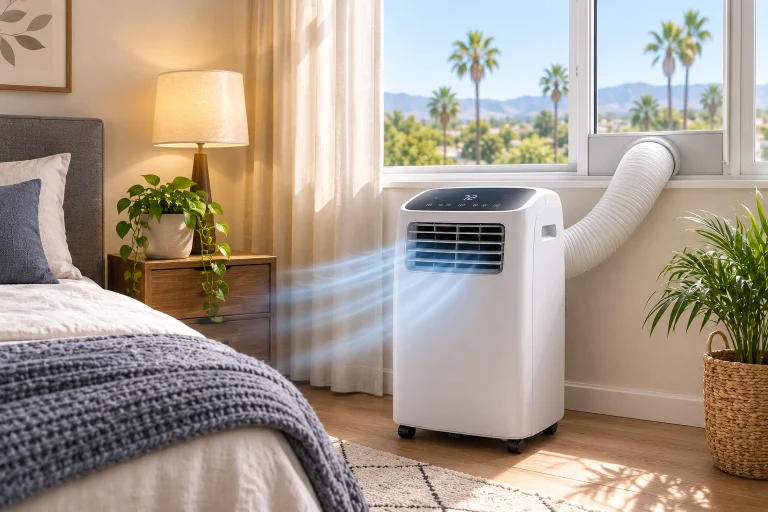
For most SFV bedrooms and smaller rooms, a portable AC in the 8,000 to 10,000 BTU range is often the starting point. Larger living rooms, open layouts, or spaces with a lot of sun may need 12,000 BTU or more, especially in homes that hold heat well after sunset.
The safest way to size a portable AC is to look at the room first, then adjust for Valley conditions. A unit that works fine in a shaded apartment in Van Nuys may feel underpowered in a west-facing room in Woodland Hills or a converted garage in North Hollywood.
How SFV Heat, Sun Exposure, and Room Layout Affect Portable AC Sizing
The San Fernando Valley has a way of making air conditioners work harder than you expect. Hot afternoons, strong sun, and warm indoor surfaces can all increase the cooling load, especially in homes with older windows or limited insulation.
West-facing rooms, attic spaces, and sun-baked patios
West-facing rooms usually get the harshest late-day sun, which can make a portable AC cycle longer and struggle to catch up. Attic bedrooms and rooms above garages often trap heat too, so sizing up is usually smarter than buying the smallest unit that “should” fit the square footage.
Rooms near patios or sliding doors can also warm up fast when doors open and close during family gatherings. If the space gets direct afternoon sun, plan for extra BTUs rather than relying on the label alone.
Open floor plans, sliding doors, and high ceilings in Valley homes
Open floor plans are tricky because cool air spreads into adjacent spaces instead of staying where you need it. High ceilings make the room feel bigger, and that extra air volume matters when you’re trying to cool a living room or kitchen-dining combo.
If your home has large sliders, older single-pane windows, or a layout that connects several rooms, the portable AC may need to work like a small-zone cooler instead of a true whole-room solution. That’s where many SFV buyers end up happier with a larger unit or a dual-hose model.
Portable AC Sizing by Room Type: Bedrooms, Living Rooms, Garages, and ADUs
Room type matters just as much as square footage. A small bedroom with the door closed behaves very differently from a garage conversion with concrete floors, a fridge, and people coming and going.
Small bedrooms and home offices
For a compact bedroom or office, a smaller portable AC is usually enough if the room stays closed and shaded. These spaces often do well with 8,000 to 10,000 BTU units, especially if you only need cooling at night or during work hours.
If the room faces west, has a lot of electronics, or doubles as a nursery or guest room, it may be worth moving up a size. That extra cushion can make the difference between “barely okay” and actually comfortable during a Valley heat wave.
Family rooms and combined kitchen-dining spaces
Family rooms and kitchen-dining areas are harder to cool because they usually have more people, more appliances, and more open air. In these spaces, 10,000 to 14,000 BTU is often a more realistic range, depending on the layout and sun exposure.
Cooking adds heat fast, and in SFV homes that heat can linger. If the portable AC is meant to help during dinner, movie night, or weekend hosting, don’t undersize it just to save a little upfront money.
Converted garages, guest rooms, and backyard ADUs
Converted garages and ADUs can be comfortable with the right portable AC, but they often need more cooling than a standard bedroom. Concrete, poor insulation, and extra sun exposure can all make these spaces feel hotter than the same square footage inside the main house.
Guest rooms and backyard units also vary a lot from one property to the next. A shaded ADU in a breezy yard may need less capacity than a garage conversion that bakes all afternoon, so it helps to think in terms of heat gain, not just size.
BTU Guide: Matching Portable AC Capacity to SFV Square Footage
BTU ratings give you a starting point, but they are not the whole story. Use them as a baseline, then adjust for Valley heat, room shape, and how hard the unit will have to work each day.
Recommended BTU ranges for common room sizes
As a general guide, smaller rooms around 150 to 250 square feet often fit in the 8,000 BTU range. Medium rooms around 250 to 400 square feet usually land in the 10,000 to 12,000 BTU range, while larger spaces may need 12,000 BTU or more.
For a quick reference, think of BTU as the cooling muscle of the unit. Too little and the AC runs constantly; too much and you may pay more than needed for a space that does not benefit from the extra capacity.
When to size up for extra heat, people, or appliances
Size up when the room gets direct afternoon sun, when several people use the space, or when electronics and appliances add heat. A home office with two monitors is one thing; a kitchen-adjacent family room during dinner prep is another.
It also makes sense to go larger if you want faster cooldown after work or after a commute on a hot Valley day. In SFV, many people want the room to cool quickly, not just eventually.
Portable ACs that are too small for the room can run nonstop, waste energy, and still leave the space uncomfortable. In Valley heat, “close enough” often turns into “not enough.”
Single-Hose vs. Dual-Hose Portable AC Units for Valley Living
Once you know the size range, the next big choice is hose setup. This matters a lot in the San Fernando Valley because hot outdoor air can make inefficient units struggle even harder.
Which setup works better for hot afternoons and long cooling cycles
Dual-hose portable AC units are usually better for hot afternoons because they pull in outside air and exhaust heat more efficiently. That can help the unit cool a room faster and maintain temperature with less strain.
Single-hose units are common and often cheaper, but they can be less efficient because they create negative pressure and pull warm air into the room. If your space gets very hot or stays closed for long periods, dual-hose is often the better fit.
For SFV renters and homeowners who need real cooling in a sun-exposed room, a dual-hose portable AC with a solid window kit is usually the best value choice, even if the upfront price is a little higher.
Noise, efficiency, and energy use considerations for apartments and homes
Noise matters in apartments, bedrooms, and home offices, especially if you are trying to sleep with the unit running. More powerful portable ACs can be louder, so it helps to balance capacity with your tolerance for fan sound.
Energy use also varies by setup. A more efficient unit may cost more upfront, but it can be the better long-term choice if you run the AC through many hot days and warm evenings in the Valley.
| Option | Best For | Note |
|---|---|---|
| Single-hose | Budget buyers, smaller rooms | Usually cheaper, but less efficient in hot SFV conditions |
| Dual-hose | Hot rooms, longer cooling cycles | Often better for west-facing spaces and larger rooms |
Buying Tips for 2026: Features That Matter in the San Fernando Valley
When shopping in 2026, the best portable AC is not just the one with the biggest BTU number. Look for features that match how SFV residents actually use these units: quick cooldown, easy setup, and reliable seasonal storage.
Dehumidifier mode, smart controls, and energy-saving settings
Dehumidifier mode can help if a room feels sticky, though the Valley is often more about dry heat than heavy humidity. Smart controls are useful if you want to turn the unit on before you get home from work or while you are stuck in traffic on the 405 or 101.
Energy-saving settings, timers, and sleep modes are worth paying attention to if you plan to run the unit every day. In budget models, you may see fewer features; mid-range and premium units usually offer better control and convenience.
Window kits, drainage, mobility, and storage for seasonal use
A good window kit matters more than people think, especially in older Valley apartments and homes with awkward windows. If the exhaust setup leaks hot air back into the room, even a correctly sized unit can underperform.
Drainage is another practical detail. Some units need more attention in certain conditions, and mobility matters if you plan to roll the unit between a bedroom, office, and guest room. If you only use it part of the year, make sure it is easy to store without taking over a closet.
- Room square footage
- Sun exposure and window direction
- Ceiling height and open layout
- Number of people using the room
- Appliances and electronics that add heat
- Single-hose vs. dual-hose design
- Window kit fit and sealing quality
Practical Sizing Examples for SFV Families, Commuters, and Outdoor Entertaining
The easiest way to choose the right size is to picture how you actually use the room. San Fernando Valley homes are full of real-life situations that push portable ACs harder than a simple chart suggests.
Cooling a bedroom after a hot commute
If you get home after a long commute and want the bedroom cool fast, a slightly larger unit may be worth it. The room may be small, but the goal is quick recovery after a hot car ride, hot sidewalks, and a house that has been warming all day.
For this use case, many people are happier with a 10,000 BTU unit in a sun-facing bedroom than with the smallest possible model. A little extra capacity can make the room feel ready sooner.
Making a patio-adjacent room comfortable for family gatherings
Patio-adjacent rooms can heat up whenever people move in and out, especially when doors stay open during gatherings. If the room connects to outdoor entertaining, it is smart to size up and choose a unit that can keep up with the extra load.
This is especially true in the Valley during summer evenings, when the house may still hold heat from the daytime. A stronger unit can help the room stay usable while everyone is eating, talking, and moving around.
Portable ACs work best when the room is sealed as tightly as possible. In the SFV, even a small air leak can matter when the outside air is still hot after sunset.
Keeping a kitchen or playroom usable during peak summer heat
Kitchens and playrooms create a lot of internal heat because of cooking, movement, and extra people. If you are using a portable AC to make these spaces usable in summer, do not size for the room alone; size for the activity.
For families, that often means choosing a mid-range or premium unit with enough capacity to handle real daily use. It is usually better to have a little extra cooling than to buy once and wish you had gone bigger.
- Measure the room and note sun exposure
- Seal windows and doors before judging performance
- Choose dual-hose for hotter, harder-to-cool spaces
- Buying by square footage alone
- Expecting a small unit to cool an open layout
- Ignoring heat from cooking, people, and electronics
Final Takeaway: The Best Portable AC Size for Your SFV Space
If you are asking what size portable air conditioner do i need, the short answer is: start with the room size, then size up for Valley heat, sun exposure, and open layouts. In many San Fernando Valley homes, that means 8,000 to 10,000 BTU for smaller rooms and 12,000 BTU or more for larger or hotter spaces.
The best choice is the one that fits how you actually live. For SFV renters, commuters, parents, and anyone trying to beat the afternoon heat, a slightly larger and more efficient portable AC often delivers a better experience than a bare-minimum unit that never quite catches up.
- Size by room first, then adjust for SFV sun and heat.
- West-facing rooms and open layouts usually need more BTUs.
- Dual-hose units often perform better in hot Valley conditions.
- Choose features that match daily use, noise, and storage needs.
Recommended Products
SHOP THIS SETUP
Whynter ARC-14S 14,000 BTU Dual Hose Portable Air Conditioner
This model stands out because dual-hose portable ACs cool more efficiently than many single-hose units, which matters when San Fernando Valley heat pushes rooms harder in the afternoon. It’s a strong pick for larger bedrooms, living rooms, or garage spaces where proper sizing is crucial, and the higher BTU rating makes it a better fit if you’re trying to cool a space that gets a lot of sun.
Frequently Asked Questions
Most small bedrooms do well with 8,000 to 10,000 BTU, depending on sun exposure and insulation. If the room faces west or gets hot in the afternoon, sizing up can help.
Often yes, especially for hotter rooms and longer cooling cycles. Dual-hose units usually handle Valley heat more efficiently than single-hose models.
A 300 square foot room often falls around 10,000 to 12,000 BTU. If the room gets strong sun, has high ceilings, or holds extra heat, consider the higher end.
It can help, but open layouts are harder to cool because air spreads into nearby spaces. You may need a larger unit or a dual-hose model for better results.
Usually yes, because garages often have more heat gain, less insulation, and harder surfaces. Many garage conversions need more cooling than a standard bedroom of the same size.
Look for a good window kit, easy drainage, timers, smart controls, and energy-saving modes. These features matter a lot if you plan to use the unit often in the San Fernando Valley.