Portable Air Conditioner Refrigerant Types

Portable AC refrigerant type matters because it affects efficiency, environmental impact, and how a unit fits your cooling needs. In the San Fernando Valley, the best choice is usually a well-sized model with strong venting and the right refrigerant for your budget and room.
If you’re shopping for a portable AC in the Valley, the refrigerant inside the unit matters more than most people realize. It affects cooling performance, efficiency, environmental impact, and sometimes even safety, which is especially important when you’re trying to beat San Fernando Valley heat without running up a giant summer bill.
- R-410A: Common in older portable ACs, but less future-focused for new buyers.
- R-32: A newer low-GWP option often found in efficient modern models.
- R-290: Used in some compact eco-focused units, with safety and ventilation limits.
- Fit matters most: BTU rating, hose design, and room size can outweigh refrigerant choice.
- SFV reality: Long hot seasons make efficiency and maintenance especially important.
Portable Air Conditioner Refrigerant Types: What San Fernando Valley Residents Need to Know in 2026
Why refrigerant type matters for SFV heat waves, apartment cooling, and summer energy bills
Portable air conditioner refrigerant types may sound like a technical detail, but they can make a real difference in everyday use. In the SFV, where upstairs bedrooms, sun-baked apartments, garages, and ADUs can get uncomfortable fast, the right refrigerant can help a unit cool more efficiently and keep pace with long hot stretches.
It also matters because California buyers are seeing more low-GWP options and fewer older refrigerants in new models. If you’re comparing budget, mid-range, and premium units, refrigerant type is one of those behind-the-scenes factors that can influence value over time.
What readers are trying to solve: choosing, replacing, or safely using a portable AC at home
Most people reading about refrigerants are trying to do one of three things: pick the right portable AC, understand what’s already in the unit they own, or figure out whether a problem is a refrigerant issue at all. That’s a smart place to start, because portable ACs are not like window units or central systems, and the details can be easy to mix up.
If you’re still learning the basics of how these units move heat, our guide on how a portable air conditioner works is a helpful companion read. And if you’re wondering whether a portable unit will actually keep up in local conditions, it’s worth checking whether portable air conditioners work well for your space.
How Portable AC Refrigerants Work in Real San Fernando Valley Homes
Cooling basics in a portable unit: compressor, coils, and heat removal
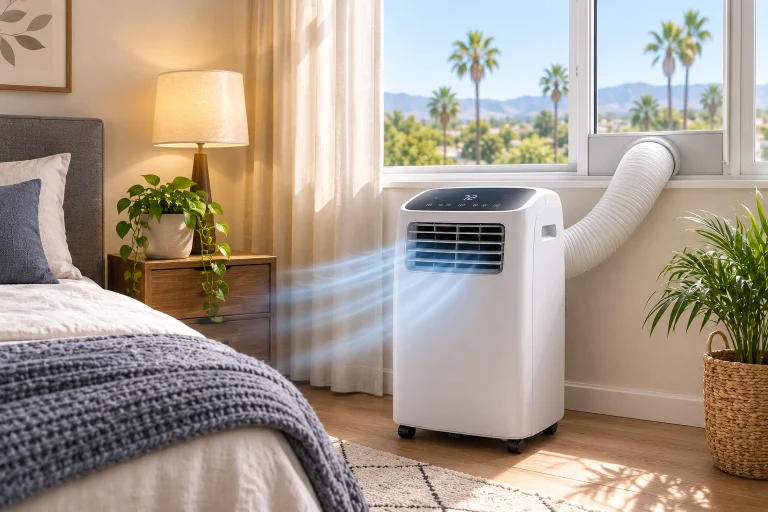
A portable air conditioner uses refrigerant to move heat from inside your room to the outside air. The compressor pressurizes the refrigerant, the evaporator coil absorbs indoor heat, and the condenser coil releases that heat through the exhaust hose.
That cycle is why refrigerant matters. The type used in the system affects how well the unit transfers heat, how much energy it needs, and how the machine behaves in tough conditions like a closed bedroom with afternoon sun or a garage with poor airflow.
Why refrigerant choice affects performance in hot upstairs rooms, garages, and ADUs
In the Valley, a portable AC often has to work harder than people expect. Upstairs rooms can trap heat, garages can get brutal after a full day of sun, and ADUs may have limited insulation or awkward venting setups.
A unit with a refrigerant that supports efficient heat transfer can be easier to live with in those spaces. That doesn’t magically turn a small portable AC into a whole-house solution, but it can help the unit feel less strained during peak afternoon heat.
How local weather patterns in the Valley change cooling demand from May through October
San Fernando Valley cooling season tends to stretch longer than many other parts of the region. Warm spells can start in spring, and late-season heat can linger into fall, especially when dry air and direct sun keep indoor spaces warm after sunset.
That means your portable AC may be running for more months than you originally expected. When a unit is used heavily, efficiency and refrigerant choice start to matter even more because they affect comfort, noise, and long-term operating cost.
Common Portable Air Conditioner Refrigerant Types in 2026
R-410A: still common in many older portable units and what that means for buyers
R-410A is still found in many older portable air conditioners and some current inventory, especially on clearance or in older stock. It has been widely used for years, so many shoppers will still see it on product labels or spec sheets.
For buyers, the big takeaway is that R-410A is no longer the most future-focused option. It can still cool well in a portable unit, but many shoppers are now comparing it against newer refrigerants with lower environmental impact.
R-32: the newer low-GWP option showing up in more efficient models
R-32 is showing up more often in newer portable AC designs because it offers a lower global warming potential than older mainstream options. In plain English, it’s one of the refrigerants buyers are seeing more often in efficient, modern models.
For SFV residents, R-32 can be appealing if you want a newer unit that balances performance and environmental considerations. It’s not the only factor that matters, but it’s a good sign when you’re comparing models in the mid-range and premium tiers.
R-290 propane: why some compact and eco-focused units use it
R-290, which is propane-based, is used in some compact and eco-focused portable ACs. It’s attractive because of its low-GWP profile and because it can support efficient cooling in smaller units.
That said, the refrigerant choice is only part of the story. With R-290 units, shoppers should pay attention to safety instructions, room size limits, and ventilation guidance, especially in apartments or small enclosed rooms.
Refrigerants you may still see in older or budget units and why they matter less for new purchases
You may still run into older refrigerants in used units, clearance stock, or very budget-friendly models. These can include legacy blends or older-generation options that were common before newer standards started shifting the market.
For most new purchases in 2026, they matter less because the market is moving toward newer refrigerants and more efficient designs. If you’re buying secondhand, though, the refrigerant label is worth checking carefully before you commit.
Comparing Refrigerant Types for SFV Families, Apartments, and Small Homes
Cooling power and efficiency for bedroom, nursery, and home office use
For a bedroom or home office, the best refrigerant is usually the one paired with a well-designed, efficient unit rather than the refrigerant alone. Still, newer refrigerants like R-32 and R-290 often show up in models that are built with efficiency in mind.
For nurseries or quiet sleeping spaces, stable cooling and a unit that doesn’t have to run constantly can be a big plus. In the Valley, that can mean less noise, fewer temperature swings, and a better shot at sleeping through a warm night.
Noise, portability, and size differences for condo balconies and tight hallways
Refrigerant type does not directly determine noise, but it often tracks with the overall design of the unit. Newer refrigerants are more likely to appear in updated compact models, which can be easier to move through tight hallways or store in a closet or laundry area.
If you live in a condo or apartment with limited space, size and hose routing may matter more than the refrigerant name on the label. A smaller, easier-to-position unit can be more useful than a bigger machine with a fancy spec sheet.
Environmental impact and how California buyers are thinking about lower-GWP options
California shoppers are increasingly paying attention to lower-GWP refrigerants because environmental impact is part of the buying decision now. That doesn’t mean every older refrigerant is “bad” in practical terms, but it does mean newer options can feel like a better long-term fit.
For many SFV families, the choice comes down to balancing comfort, budget, and sustainability. If two units are close on price and performance, the one with a lower-impact refrigerant can be the easier choice to feel good about.
Safety considerations for homes with kids, pets, and limited ventilation
Portable AC refrigerants are sealed inside the system, so they are not something homeowners should handle directly. The main safety issue is choosing a unit that is appropriate for your space and following the manufacturer’s ventilation and placement instructions.
If you have young kids, curious pets, or very limited airflow, pay close attention to the unit’s safety guidance, hose setup, and room-size limits. A compact eco-friendly model is not automatically the safest choice if it is undersized or poorly vented.
What to Look for on the Label Before You Buy a Portable AC
How to read the refrigerant type on the product page or nameplate
You’ll usually find the refrigerant listed on the product page, the box, or the nameplate on the unit itself. Look for markings like R-32, R-410A, or R-290, and confirm that the listing matches the exact model you’re buying.
If a seller can’t clearly tell you the refrigerant type, that’s a red flag. This is especially true with secondhand units, where the listing may leave out details that matter for performance and long-term use.
Matching refrigerant choice with BTU rating, hose design, and room size
Refrigerant type should never be the only thing you compare. A portable AC also needs the right BTU rating, a hose design that fits your room, and a layout that can actually vent hot air outside without fighting the setup.
- Room size and ceiling height
- Single-hose or dual-hose design
- Window access and hose length
- Noise level for sleeping or working
- Energy efficiency and dehumidification
Signs a unit is better suited for SFV living: energy efficiency, dehumidification, and heat-wave performance
In the Valley, a good portable AC should do more than just blow cold air. It should hold up during long hot afternoons, remove some humidity when needed, and avoid wasting too much power while it cycles.
That is why efficiency ratings and real-world cooling design matter as much as refrigerant type. A well-built unit with a sensible refrigerant is usually a better buy than a flashy model that struggles once the temperature climbs.
When a dual-hose design may outperform a single-hose unit in valley heat
Dual-hose portable ACs often perform better in hot climates because they reduce the amount of indoor air the unit pulls out and replaces with warm outside air. In a place like the SFV, that can make a noticeable difference in a room that gets direct sun.
Single-hose units can still work fine for smaller spaces or lighter use, especially if you’re cooling a bedroom at night. But for tougher rooms, dual-hose is often the smarter setup even before you start comparing refrigerants.
Buying Tips for San Fernando Valley Shoppers in 2026
Best use cases: apartments, guest rooms, garage gyms, and backyard workspaces
Portable ACs make the most sense when you need targeted cooling in a specific room. That includes apartments without central air, guest rooms used only part of the year, garage gyms, and backyard offices or workspaces where permanent installation is not practical.
For outdoor-adjacent spaces, just remember that the hotter and less insulated the area is, the more important unit efficiency becomes. A portable AC is a convenience tool, not a substitute for good insulation or shade.
How to compare price, efficiency, and expected lifespan across refrigerant types
Budget portable ACs may look tempting, but they often cut corners on design, noise, or efficiency. Mid-range models usually offer the best balance for most SFV households, while premium units can be worth it if you’ll run the AC a lot every summer.
Refrigerant type can influence the class of unit you’re looking at, but it shouldn’t be the only reason you spend more. Think in terms of total value: cooling comfort, power use, and how long the unit is likely to stay useful.
What to avoid when shopping secondhand or clearance portable ACs
Secondhand portable ACs can be a bargain, but only if the unit is in good shape and clearly labeled. Avoid anything with missing specs, damaged hoses, or signs of poor maintenance, because those issues can erase the savings fast.
- Verify the refrigerant type before buying
- Check filters, vents, and hose condition
- Ask how old the unit is and how often it was used
- Buying a unit with no model label
- Assuming “cheap” means efficient
- Using a clearance unit without checking return policy
How local utility costs and summer peak demand can affect long-term value
In the SFV, long cooling seasons can make electricity use a bigger part of the equation than the sticker price. A slightly more efficient unit may cost more upfront but save frustration when temperatures stay high for weeks at a time.
That’s why many shoppers end up choosing a better-designed mid-range or premium portable AC instead of the absolute cheapest option. The real value shows up when the unit is actually running every day.
Safe Use, Maintenance, and Disposal in a Hot, Dusty Climate
Why refrigerant should never be handled or refilled by homeowners
Portable AC refrigerant is sealed inside the system, and homeowners should not try to refill or repair it themselves. If a unit is underperforming, the cause is often airflow, venting, dirty filters, or a mechanical issue rather than something you should try to top off.
If you suspect a sealed-system problem, contact the manufacturer or a qualified technician. That’s the safest route and usually the most cost-effective one too.
Keeping coils, filters, and exhaust hoses clean during Santa Ana wind season
Dust is a real issue in the Valley, especially when winds kick up and outdoor debris gets pulled into your home. Dirty filters and clogged vents can make a portable AC feel weak even when the refrigerant system is fine.
During dusty weeks, check the filter more often than the manual suggests. A clean filter and a straight, well-sealed exhaust hose can make a bigger difference than many people expect.
Signs of refrigerant problems versus normal performance issues
Not every cooling problem means there’s a refrigerant leak. Weak airflow, warm exhaust hose issues, poor window sealing, or an undersized unit can all make a portable AC seem underpowered.
True refrigerant problems are usually less common than setup issues. If the unit is suddenly not cooling, or if it cycles strangely and never seems to stabilize, that’s when it makes sense to seek professional help.
Responsible disposal and recycling considerations for old units in the SFV
When a portable AC reaches the end of its life, don’t just leave it at the curb. Refrigerants and other components should be handled through proper recycling or appliance disposal channels.
Local drop-off rules can vary by city and by season, so check current disposal options before hauling it out. Responsible disposal helps keep old refrigerants out of the air and keeps bulky appliances from becoming neighborhood clutter.
Practical Recap: Choosing the Right Portable AC Refrigerant Type for SFV Living
Best-fit takeaway by household type: renter, homeowner, commuter, or family
Renters usually benefit from a compact, easy-to-move unit with clear labeling and simple venting. Homeowners may have more flexibility to choose a better-performing dual-hose model, especially for a garage, office, or upstairs room.
Commuters and hybrid workers often want quieter operation and dependable cooling for a home office, while families may care most about safety, room coverage, and stable performance during long heat waves.
Quick decision framework for balancing cooling needs, safety, and efficiency
Start with room size, then check the hose design, efficiency, and refrigerant type. After that, compare noise, portability, and how easy the unit is to maintain in a dusty climate.
Final guidance for choosing a portable air conditioner that handles Valley summers well
Portable air conditioner refrigerant types matter, but they work best as part of a bigger decision. In the San Fernando Valley, the right mix is usually a properly sized unit, a good venting setup, and a refrigerant that fits today’s efficiency and safety expectations.
If you keep that balance in mind, you’ll be in a much better position to choose a portable AC that can actually handle Valley summers without becoming a regret purchase by August.
Recommended Products
SHOP THIS SETUP
Arctic Air Pure Chill 2.0 Evaporative Air Cooler by Ontel
For San Fernando Valley readers comparing refrigerant-based cooling options, this compact evaporative cooler is a practical alternative when you want lower energy use and no refrigerant handling at all. It’s lightweight, easy to move between rooms, and works well for spot cooling in dry heat, which makes it a smart fit for many SFV apartments and home offices.
Frequently Asked Questions
For most buyers, the best choice is the refrigerant used in a well-sized, efficient unit rather than the refrigerant alone. In 2026, R-32 and R-290 are common in newer models, while R-410A still appears in many older units.
No. Portable AC refrigerant is sealed inside the system and should not be handled by homeowners. If you suspect a refrigerant issue, contact the manufacturer or a qualified technician.
R-290 is used in some compact portable ACs and can be a good low-GWP option. Safety depends on following the manufacturer’s instructions, especially room size and ventilation guidance.
Yes, but it is only one factor. BTU rating, hose design, room size, and overall unit quality usually have a bigger impact on real-world cooling.
Not always, but you should be careful. Check the refrigerant label, model information, hose condition, and overall maintenance history before buying used.
Start with room size and venting setup, then compare efficiency, noise, and refrigerant type. In Valley heat, a properly sized and well-vented unit matters more than a fancy label.