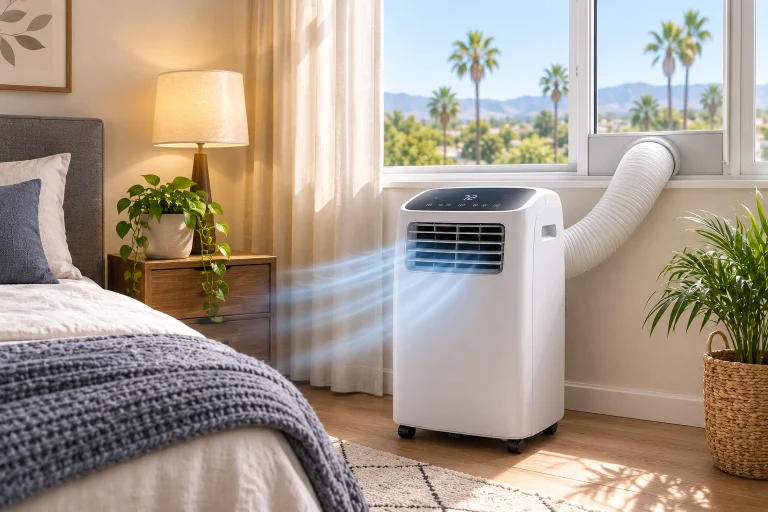
How to Make Portable Ac More Effective

Make a portable AC more effective by sealing air leaks, improving the exhaust setup, and cooling only the room you actually use. In the San Fernando Valley, good placement, proper sizing, and regular filter cleaning matter as much as the unit itself.
If you live in the San Fernando Valley, you already know a portable AC can feel like a lifesaver one day and barely keep up the next. The good news is that a few setup changes, the right unit size, and some SFV-specific habits can make a big difference.
- Seal first: Close gaps around windows, doors, and sliders.
- Vent better: Keep the exhaust hose short, straight, and fully outside.
- Match the room: Size the unit for sun exposure and layout, not just square footage.
- Use support tools: Curtains, fans, and zoning help in Valley heat.
- Maintain it: Clean filters and check seals all summer.
Why Portable ACs Struggle in San Fernando Valley Heat
Portable air conditioners can work well, but they are fighting a tough environment in the Valley. Between dry heat, long sunny afternoons, and warm evenings that don’t cool down fast, these units often run longer than people expect.
If you want the bigger picture first, it helps to understand how a portable air conditioner works. Once you know how the exhaust and airflow system behaves, it becomes much easier to fix weak cooling.
How the SFV’s dry heat, afternoon peaks, and warm evenings affect cooling performance
San Fernando Valley heat tends to build through the day, especially in rooms with west- or south-facing windows. That means a portable AC may start the morning okay, then fall behind once the sun hits the glass and indoor temperatures climb.
Dry heat can also be misleading. Even when humidity is low, a room can still feel stubbornly hot if the AC is recirculating warm air or if the exhaust hose is dumping heat back into the space. Warm evenings make the problem worse because the unit never gets much of a break.
Common SFV home setups that make portable ACs work harder: apartments, ADUs, garages, and sun-facing rooms
Many Valley homes and rentals have layouts that are not ideal for portable cooling. Apartments, ADUs, garage conversions, and sun-facing bedrooms often have limited venting options, older windows, or thin insulation.
That doesn’t mean a portable AC is a bad choice. It just means the room setup matters more here than it might in a milder climate. A unit that feels fine in a shaded interior room may struggle in a garage office or a small upstairs space with afternoon sun.
In extreme Valley heat, a portable AC can only do so much if the room is leaking hot air, getting direct sun, or much larger than the unit was designed to handle.
How to Make a Portable AC More Effective in an SFV Home
The fastest improvements usually come from reducing heat gain and improving venting. Before you buy a bigger machine, it is often smarter to tighten the room and help the unit breathe.
Seal window gaps, doors, and sliding glass openings to keep hot air out
Portable ACs lose efficiency when cool air escapes and warm air sneaks in. In SFV homes, that often happens around window kits, sliding patio doors, worn weatherstripping, and gaps under interior doors.
Use foam seal strips, door draft stoppers, and a tighter window panel setup to reduce air leaks. If you have a sliding glass opening, make sure the vent kit is actually sealed to the panel and not just sitting loosely in place.
On especially hot days, close off the room first and let the portable AC cool one zone at a time. Cooling a whole apartment at once usually wastes power and weakens the result.
Improve exhaust setup for better venting in bedrooms, home offices, and converted spaces
The exhaust hose is one of the most overlooked parts of the setup. If the hose is too long, kinked, or running through a hot space, the AC has to work harder and the room stays warmer.
Keep the hose as short and straight as possible. If the unit sits in a bedroom or office, place it near the window, avoid sharp bends, and make sure hot exhaust is going fully outside instead of leaking back in.
For more detail on performance limits, it also helps to read whether portable air conditioners work well in different room types. The short version: they can, but setup matters a lot.
Use fans, curtains, and room zoning to reduce heat load during Valley heat waves
A portable AC works best when it is not trying to fight every source of heat at once. Blackout curtains, reflective shades, and a simple fan can make the room easier to cool and help the cold air circulate faster.
Room zoning is especially useful in larger SFV homes. Close doors to hallways and unused rooms, and keep the cooled space as small as practical. That is often the difference between “barely enough” and “actually comfortable.”
Fans do not lower the room temperature by themselves, but they help you feel cooler and let the AC reach comfort faster. That can reduce run time during long heat stretches.
Choosing the Right Portable AC for Local Living Spaces
If your current unit is undersized, no amount of sealing will fully solve the problem. Matching the AC to the room is still one of the most important parts of getting better results in the Valley.
Single-hose vs dual-hose models for SFV bedrooms, studios, and family rooms
Single-hose models are common and often cheaper, but they can pull warm air into the room as they exhaust hot air out. That makes them less efficient in hot climates and more noticeable in rooms that already run warm.
Dual-hose models usually perform better because they separate intake and exhaust more effectively. For SFV bedrooms, studios, and family rooms that get strong sun exposure, dual-hose units are often the better long-term choice if your budget allows.
Matching BTU capacity to room size, ceiling height, and sun exposure
BTU rating matters, but room shape matters too. A small room with high ceilings, west-facing windows, or lots of electronics may need more cooling than a simple square bedroom of the same floor size.
For SFV households, it is usually smart to size up slightly if the space gets direct sun, has poor insulation, or doubles as an office with computers and monitors. Just do not go so large that the unit short-cycles and fails to dehumidify or circulate properly.
- Room square footage
- Ceiling height
- Sun exposure and window direction
- Insulation quality
- Heat from people, appliances, and electronics
Features that matter most in 2026: inverter tech, dehumidification, smart controls, and sleep modes
In 2026, the most useful features are the ones that improve comfort without wasting energy. Inverter-style compressors can help units run more smoothly, while good dehumidification and sleep modes make a room feel better overnight.
Smart controls are convenient for renters and busy families, especially if you want to pre-cool a room before arriving home. Just remember that app features are nice extras, not substitutes for proper venting and correct sizing.
SFV-Specific Setup Tips for Better Cooling Performance
Local room layout can make or break a portable AC. The same unit may feel much better after a simple repositioning or a smarter choice of where it vents.
Best placement near shaded windows, interior walls, or garage-adjacent rooms
Whenever possible, place the unit near a shaded window instead of a sun-baked one. Interior walls can also help because the AC is not sitting right next to the hottest part of the room.
In garage-adjacent rooms, keep the AC away from hot exterior surfaces and make sure the garage door is sealed well. A poorly insulated garage wall can radiate heat all afternoon and undo a lot of the cooling work.
Managing heat from kitchens, laundry areas, and home entertainment setups
Portable ACs struggle when they are placed near heat-producing appliances. Kitchens, laundry rooms, gaming setups, and rooms with multiple TVs or desktop computers all add extra load.
Try to separate the cooling zone from the heat source when you can. If you are working from home, even moving a laptop, monitor, or printer away from the AC’s intake path can help the room feel more stable.
How to cool a patio-adjacent room without pulling in outdoor heat
Patio-adjacent rooms are common in the Valley, but they can be tricky because sliding doors and sun exposure invite heat back inside. Keep the patio door fully closed, seal the edges, and use shades or curtains during peak sun hours.
If the room opens frequently to outdoor traffic, pre-cool it before the busiest part of the day. That is especially useful for family spaces where people move in and out with kids, groceries, or backyard gear.
Portable AC performance often drops more from poor venting than from the unit itself. In a hot Valley room, a tighter exhaust setup can matter as much as a bigger BTU number.
Portable AC Maintenance That Improves Efficiency All Summer
Maintenance is not glamorous, but it is one of the easiest ways to keep a portable AC useful through a long SFV summer. Dust, lint, and clogged drainage can slowly drag performance down.
Cleaning filters, coils, and drain systems during long cooling seasons
Clean the air filter regularly, especially if you are running the unit daily. Valley dust, pet hair, and general household debris can build up faster than people expect.
If your model allows access to the coils or drain path, check those too. A clean system moves air better, handles moisture more reliably, and usually sounds less strained during long cooling stretches.
Checking hoses, seals, and condensate buildup after Santa Ana winds or dust events
After windy days or dusty conditions, inspect the hose and window seal. Santa Ana winds can shake loose a vent kit, and dust can collect around the intake area or clog filters faster.
Also check for condensate buildup if the unit has been running hard. If the drain system is not working as expected, performance can slip and the AC may shut down more often than it should.
If you smell something burning, see repeated leaks, or notice the unit cycling oddly even after cleaning, stop using it and inspect it before running it again.
When maintenance is enough and when the unit is undersized or wearing out
Sometimes the problem is not dirt or setup. If the AC runs nonstop, never gets the room comfortable, and still struggles after sealing and cleaning, it may simply be too small for the space.
Older units can also lose effectiveness as they wear out. If a unit used to cool reasonably well but now underperforms even in the same room, it may be time to upgrade instead of endlessly troubleshooting.
Product Comparisons and Buying Tips for SFV Households
Different households need different trade-offs. A renter in a small apartment does not need the same portable AC as a family cooling a combined living-and-work space.
Comparing portable ACs for renters, families, and multi-use rooms
Renters usually benefit from easy installation, a compact footprint, and a window kit that works with the lease setup. Families may care more about stronger cooling, better airflow, and the ability to move the unit between rooms.
For multi-use rooms, look for a balance of power and convenience. A unit that is easy to roll from a bedroom to a home office can be more practical than buying a larger model that only works well in one location.
| Option | Best For | Note |
|---|---|---|
| Budget single-hose | Small rental rooms | Lower upfront cost, but less efficient in hot sun |
| Mid-range dual-hose | Bedrooms and studios | Often the best balance for SFV heat |
| Premium inverter model | Daily use and larger spaces | Better comfort features, but costs more |
Noise levels, energy use, and mobility for bedrooms, nurseries, and work-from-home spaces
Noise matters more than people think, especially in bedrooms and nurseries. A unit that cools well but is too loud may still be a bad fit for overnight use or video calls.
Energy use is another trade-off. If you plan to run the AC daily through a long Valley summer, efficiency can matter more than the cheapest sticker price. Mobility also matters if you need to shift the unit between a nursery, office, and guest room.
What to look for when shopping in 2026: warranty, hose length, app control, and energy efficiency
In 2026, the basics still matter most: a decent warranty, a hose long enough for your window setup, and controls you will actually use. App control is helpful, but it should not be the main reason you buy a unit.
If you are comparing price ranges, think in tiers rather than exact numbers. Budget models are fine for occasional use, mid-range units often hit the sweet spot for SFV homes, and premium models make sense if you want quieter operation and better daily performance.
For most San Fernando Valley bedrooms and home offices, a mid-range dual-hose portable AC is often the safest all-around choice if you want better cooling without jumping straight to a premium model.
Outdoor Living, Cars, and Commuting: When Portable Cooling Helps Most
Portable cooling is not just for bedrooms. In the Valley, it can also help with garage spaces, backyard transitions, and the hot moments before and after driving.
Using portable ACs for garage hangouts, backyard gatherings, and temporary cooling zones
Portable ACs can be useful in garage hangouts or temporary indoor-outdoor setups, but only if the space can be reasonably sealed. If hot air rushes in from the driveway or backyard, the unit will never really catch up.
For backyard gatherings, the more realistic strategy is to cool a nearby buffer room where people can take breaks. That works better than trying to cool open air, which is not what portable ACs are built for.
Cooling strategies for parked cars, road-trip prep, and family loading/unloading in extreme heat
A portable AC cannot cool a car directly, but the same logic applies: reduce heat before people pile in. Shade the vehicle when possible, crack the windows only when safe, and use your home’s cooled space to prep kids, bags, and supplies before loading up.
If you are getting ready for a road trip, cool the room where you pack first. That makes the whole process less miserable and helps prevent everyone from starting the drive already overheated.
How SFV commuters can reduce heat stress before and after driving, rideshares, or transit
Commuters often feel the heat most during transitions: walking to the car, waiting for a rideshare, or stepping off transit after sitting in the sun. A cool home base helps you recover faster before heading back out.
For parents juggling school runs and evening pickups, that also means less crankiness and less time spent trying to cool down after every stop. If you are managing back-to-school schedules, a better-cooled departure point can make mornings smoother.
Practical Recap: The Fastest Ways to Get Better Results from a Portable AC
If your portable AC is underperforming, start with the basics: seal the room, improve the exhaust setup, and reduce direct sun and heat sources. Those changes usually deliver the quickest improvement for SFV homes.
Top actions to prioritize for immediate cooling improvement in San Fernando Valley homes
First, tighten window and door gaps. Second, keep the exhaust hose short, straight, and fully vented outside. Third, use curtains, fans, and room zoning to reduce the amount of heat the unit has to fight.
After that, clean the filter and check the drain system. If the room still feels too warm, the next question is usually whether the unit is undersized for the space or simply not the right style for your layout.
When to upgrade, reposition, or supplement your unit for the best value
Reposition the unit if it is sitting in direct sun, too far from the window, or next to a heat source. Supplement it with better sealing and shading if the room is close to the right size but not quite comfortable.
Upgrade when the unit is clearly too small, too noisy, or too worn out to keep up with Valley heat. In many SFV homes, the best value is not the biggest portable AC — it is the one that matches the room and is installed the right way.
Recommended Products
SHOP THIS SETUP
Midea U-Shaped Inverter Window Air Conditioner, 8,000 BTU
If a portable AC just isn’t cutting it in a hot San Fernando Valley summer, this Midea U-shaped inverter window AC is a strong upgrade. It cools more efficiently than most portable units, runs much quieter, and helps reduce the heat load that makes portable ACs feel underpowered in SFV apartments and bedrooms.
Frequently Asked Questions
Hot afternoons, sun exposure, and leaky window setups can make a portable AC struggle in the Valley. Poor exhaust venting and an undersized unit are also common reasons.
Often, yes. Dual-hose models usually handle hot rooms better because they are less likely to pull warm air into the space while cooling.
Seal gaps, shorten the exhaust hose, close off unused rooms, and use curtains or fans to reduce heat load. Cleaning the filter also helps the unit perform better.
The best room size depends on the unit’s BTU rating, ceiling height, sun exposure, and insulation. A sun-facing room usually needs more cooling capacity than a shaded interior room of the same size.
Check it regularly during long cooling seasons and clean it as needed, especially if you have pets or a dusty room. A dirty filter can reduce airflow and make the unit work harder.
If the unit is clean, sealed correctly, and still cannot cool the room, it may be undersized or wearing out. Replacing it often makes more sense than continuing to troubleshoot an aging model.