How Long Do Misting Fans Last

Misting fans usually last several seasons, and heavier-duty models can last longer with regular cleaning and proper storage. In the San Fernando Valley, heat, dust, and hard water often wear out the misting parts before the fan motor fails.
If you’re wondering how long do misting fans last, the honest answer is: it depends on the build quality, how often you use it, and how well you handle San Fernando Valley heat, dust, and hard water. A decent misting fan can last several seasons, and a well-maintained heavy-duty model can last much longer.
- Lifespan: Budget fans often last 1 to 3 seasons; better models last longer.
- Main wear points: Nozzles, hoses, and connectors usually fail first.
- SFV factors: Sun, dust, and hard water can shorten real-world durability.
- Best habits: Clean regularly, store indoors, and use filtered water if possible.
How Long Do Misting Fans Last in San Fernando Valley Conditions?
In the Valley, “lasting” is about more than just whether the fan still spins. You’re really looking at three things: how long the motor and frame hold up, how long the misting parts keep working, and how well the fan performs through long, hot stretches.
What “lasts” means: fan lifespan, misting system lifespan, and seasonal performance
The fan itself is the main lifespan question. That includes the motor, blades, housing, switches, and power cord. The misting system has its own wear points, like nozzles, hoses, connectors, and pumps on some models.
Seasonal performance matters too. A fan may still “work” after a few years, but if the mist output drops, the motor gets noisy, or the unit struggles during heat waves, it may not be doing the job you bought it for.
Why SFV heat, dust, and hard-water use can change real-world durability
San Fernando Valley weather can be rough on outdoor gear. Strong sun, dry heat, dust, smog, and the occasional Santa Ana wind can all speed up wear on plastic parts, electrical components, and nozzles.
Hard water is another big factor. If you use tap water in a misting system, mineral buildup can clog nozzles and reduce mist quality much sooner than the fan motor would fail. That’s why two fans with the same sticker lifespan can age very differently here.
Typical Lifespan of Misting Fans for Patios, Yards, and Family Gatherings
Most misting fans fall into a pretty simple range, but the category you buy matters a lot. Budget models are often fine for occasional use, while heavier-duty units usually make more sense for regular backyard hangouts and longer summers.
Expected lifespan ranges for budget, mid-range, and heavy-duty models
Budget misting fans may last around 1 to 3 seasons with light-to-moderate use, especially if they stay sheltered and are cleaned regularly. Mid-range models often last 3 to 5 years or more when cared for properly.
Heavy-duty units can last longer, especially if they use stronger motors, better housings, and replaceable parts. The exact lifespan still depends on how often you run them and whether the misting system is maintained.
How often SFV homeowners use them during long summer stretches
In the Valley, many families use misting fans heavily from late spring through early fall, especially for weekend cookouts, poolside time, and patio dinners. If a fan runs several hours a day, every day, it will age faster than one used only for occasional gatherings.
That’s why a fan that seems “new” after one mild season may feel worn out after one very hot summer. Daily use during heat advisories is simply harder on the unit.
Signs a misting fan is aging before it fully fails
You don’t usually get a dramatic warning. More often, the fan starts sounding louder, wobbling more, or moving less air than it used to. The mist may also become uneven, weak, or spray in larger droplets instead of a fine cooling mist.
Other signs include cracked hoses, loose fittings, a pump that struggles to prime, or nozzles that keep clogging even after cleaning. Those are all clues the unit is moving from “maintenance” territory into “replacement” territory.
What Shortens Misting Fan Life in the San Fernando Valley
The Valley’s outdoor conditions are not gentle on equipment. If you leave a misting fan exposed all season and skip cleaning, it will usually age much faster than the same model used and stored carefully.
Sun exposure on balconies, backyard patios, and poolside setups
Direct sun can dry out plastics, fade finishes, and weaken cords or hoses over time. Balcony setups are especially vulnerable because they often get full sun with little shade or wind protection.
Poolside use can be just as tough. Chlorine, moisture, and constant exposure to sun can shorten the life of cheap materials, so a covered or partially shaded placement is usually smarter.
Dust, pollen, and wildfire ash buildup on motors and nozzles
Dust is a quiet problem because it builds slowly. It can coat fan blades, clog vents, and get inside moving parts, which forces the motor to work harder. Pollen and wildfire ash can create the same kind of mess during bad air days.
For anyone living near busy streets or open hillside areas, regular wipe-downs matter more than people think. Keeping the fan cleaner can help it stay quieter and cooler internally.
Hard water, mineral scale, and clogged misting lines
This is one of the biggest lifespan issues for misting fans in the SFV. Hard water leaves behind mineral deposits that can narrow the nozzles, restrict flow, and wear down pumps or connectors if the system has one.
If you’ve ever had a misting fan that starts strong and then turns into a dribble machine, scale is often the reason. A little maintenance goes a long way here, especially if you want the unit to last more than a couple of summers.
Overuse during heat waves and poor storage between seasons
During heat waves, some families run their fan for hours on end. That’s understandable, but nonstop use can stress the motor and shorten the life of cheaper parts, especially if airflow is restricted or the unit is dusty.
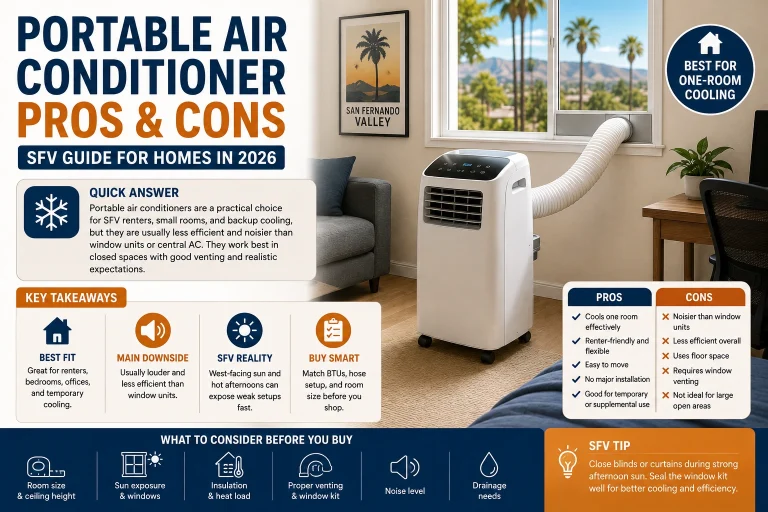
Storage matters too. Leaving a fan outside through cooler months, even on a covered patio, usually leads to rust, grime, and cracked parts. If you’re comparing cooling options, it may help to also read about whether portable air conditioners work well for indoor relief and how portable air conditioners work if you need a backup for extreme heat.
Comparing Misting Fans for SFV Outdoor Living Spaces
Not every home needs the same type of misting fan. A small apartment balcony, a shaded townhouse patio, and a big family yard all call for different setups.
Portable misting fans vs. pedestal fans vs. wall-mounted units
Portable misting fans are the easiest to move around, which makes them a good fit for renters or people who like flexible seating arrangements. Pedestal units often offer better reach and can work well for patios and backyard tables.
Wall-mounted models are more permanent and often better for dedicated outdoor spaces. They can be a smart choice if you want to keep floor space open and reduce the chance of the unit getting bumped or tipped.
| Option | Best For | Note |
|---|---|---|
| Portable misting fan | Renters, small patios, flexible use | Easy to move, but usually less rugged |
| Pedestal misting fan | Family patios and gathering spaces | Good balance of reach and convenience |
| Wall-mounted unit | Permanent outdoor setups | Stable, but less flexible |
Battery-powered, plug-in, and hose-connected models for different homes
Battery-powered models are handy for short use or places without easy outlet access, but battery life and long-term durability can vary a lot. Plug-in fans are usually more dependable for regular backyard use.
Hose-connected misting fans can be a strong option if you want a more continuous water supply, but they may need better setup and more careful winter storage. The best choice depends on whether you prioritize mobility, runtime, or steady cooling.
Best use cases for small patios, apartment balconies, and larger family backyards
For small patios and balconies, compact portable units are usually enough if you only need relief during dinner or weekend lounging. Just make sure the mist won’t blow onto neighbors, furniture, or flooring that can’t handle moisture well.
For larger backyards and family gatherings, a more durable pedestal or wall-mounted model usually makes more sense. Bigger spaces need better airflow, and that often means spending a little more for a unit that can handle frequent use.
If you live in an apartment or condo, check your HOA or lease rules before setting up a misting fan on a balcony or shared outdoor area.
Buying a Misting Fan That Lasts Longer in 2026
If you want a fan that holds up in the Valley, look beyond the marketing and focus on build quality. The cheapest option is not always the best value if it needs replacing after one hot season.
Motor quality, blade design, and weather-resistant housing
A stronger motor usually runs more smoothly and handles longer use better, especially in hot outdoor conditions. Blade design matters too, because efficient blades can move more air without making the motor work as hard.
Weather-resistant housing is worth paying attention to if the fan will live outside or near a pool. Even a good fan can struggle if the housing is flimsy or the vents are poorly protected.
Nozzle material, pump strength, and replaceable parts
For misting systems, the nozzle material and pump quality can make a big difference. Better nozzles tend to clog less and last longer, while stronger pumps can maintain more consistent mist output over time.
Replaceable parts are a huge plus. If you can swap hoses, nozzles, or connectors instead of replacing the whole fan, the unit is usually a better long-term buy.
- Sturdy motor and housing
- Replaceable nozzles and hoses
- Weather resistance for outdoor storage
- Easy cleaning access
- Stable base or mounting setup
What SFV shoppers should look for when comparing price vs. durability
In a budget model, you’re often paying for convenience and a lower upfront cost. In a mid-range or premium model, you’re usually paying for better materials, more stable performance, and fewer headaches over time.
For SFV homeowners, the sweet spot is often a model that’s sturdy enough for repeated summer use without being so expensive that you worry about every scratch or dust storm. Think about how often you’ll really use it, not just how nice it looks online.
Features that matter for family use, pets, and weekend entertaining
Families usually benefit from easy controls, stable bases, and adjustable mist settings. If kids or pets are around, a fan that’s less tippy and easier to shut off quickly is usually the safer choice.
For weekend entertaining, quiet operation and broad airflow matter more than fancy extras. A misting fan should make the patio more comfortable, not turn into the loudest thing at the party.
For SFV backyards, a mid-range pedestal misting fan with replaceable nozzles is often the best balance of durability, cooling, and value.
Maintenance Tips to Extend Misting Fan Life at Home
Good maintenance is the easiest way to get more seasons out of your misting fan. Most of the work is simple, and it pays off fast in a dusty, hard-water area like the Valley.
Cleaning nozzles and filters after dusty Santa Ana conditions
After windy or dusty days, wipe down the fan housing and check the nozzles for buildup. If your unit has a filter, clean it more often during Santa Ana conditions or high-dust periods.
A quick cleanup after bad weather can prevent small problems from turning into bigger ones. It also helps the fan stay efficient when the next heat wave hits.
Always disconnect the fan before cleaning any part of the unit.
Use a soft cloth to remove dust from blades, vents, and the housing.
Look for clogs, leaks, or loose fittings before the next use.
Using filtered or softened water to reduce mineral buildup
If your water is hard, filtered or softened water can help reduce scale inside the misting system. That doesn’t make maintenance disappear, but it can slow down clogging and keep mist output more consistent.
If filtered water isn’t practical, regular nozzle cleaning becomes even more important. The goal is to prevent minerals from settling long enough to create a stubborn blockage.
Safe storage in garages, sheds, or laundry rooms during cooler months
When the hot season winds down, store the fan in a dry, covered place. A garage or shed is usually better than leaving it on the patio, but make sure the area is not damp or exposed to pests.
If space is tight, even a laundry room corner can be better than outdoor exposure. Just make sure the unit is clean and fully dry before putting it away.
Quick inspection checklist before summer parties or heat advisories
Before the first big gathering or a forecasted hot spell, do a fast check. It’s much easier to fix a loose hose or clogged nozzle before guests arrive.
- Test the fan on low and high settings
- Run water through the misting lines briefly
- Look for leaks, cracks, and weak airflow
- Ignoring unusual motor noise
- Using a clogged misting line
- Leaving the unit dirty after storage
When to Repair, Replace, or Upgrade Your Misting Fan
Not every problem means the fan is done. Some issues are cheap and easy to fix, while others are a sign that it’s time to move on.
Common repairable problems: clogged mist lines, worn hoses, loose connectors
Clogged nozzles, worn hoses, and loose fittings are often repairable. These are the kinds of issues that can show up after hard-water use or a long dusty season, especially if the fan has been stored away for months.
If the motor still sounds healthy and the frame is solid, a repair or part replacement may be the smartest move. That’s especially true if the unit was mid-range or premium to begin with.
When replacement makes more sense than repeated fixes
If you’ve already replaced several parts and the fan still underperforms, replacement usually makes more sense. The same goes for motors that overheat, wobble badly, or keep failing after basic maintenance.
Repeated fixes can become frustrating and expensive, especially if the fan still doesn’t cool your space well enough. At that point, a better-built model is often the better value.
Choosing a better model for bigger gatherings, hotter patios, or daily use
If your current fan struggles during family gatherings or on the hottest patio afternoons, upgrade to a unit that matches your real use. Bigger spaces and more frequent use call for stronger airflow and more durable components.
For daily summer use in the SFV, it usually pays to step up one level in quality rather than buying the cheapest replacement. That extra durability can save money over time.
Practical Recap for San Fernando Valley Homeowners and Families
So, how long do misting fans last in everyday SFV outdoor use? For many households, the answer is a few seasons for budget models, several years for mid-range units, and longer for well-maintained heavy-duty fans.
How long misting fans usually last in everyday SFV outdoor use
The fan motor often outlasts the misting parts, especially in a dusty, sunny, hard-water environment. That means maintenance and storage matter just as much as the original purchase.
The most important habits for getting more seasons out of your fan
Clean it regularly, protect it from direct sun when possible, use better water if you can, and store it indoors or in a dry covered space. Those habits do more for lifespan than most people realize.
Simple buying and care takeaways for comfortable summer living
If you want the best long-term value, choose a misting fan with sturdy construction, replaceable parts, and enough power for your space. Then keep it clean and out of the weather when summer ends.
That’s the simplest way to get more cool evenings, better backyard comfort, and fewer replacement headaches in the San Fernando Valley.
Common Questions
Most budget models last a few seasons, while mid-range and heavy-duty units can last longer with good care.
Hard water, dust, and strong sun are the biggest wear factors for many Valley homes.
Usually not. The nozzles, hoses, and connectors often wear out first.
Yes. Cleaning helps prevent clogs, reduces strain, and keeps the fan running more efficiently.
If you use it often or need it for larger gatherings, a better-built unit is usually worth the extra cost.
Recommended Products
SHOP THIS SETUP
HOMENOTE Misting Fan Kit with Brass Nozzles
This misting fan kit is a smart pick for readers who want to extend the life and usefulness of an existing outdoor fan without replacing the whole unit. The brass nozzles and flexible tubing are practical for dry, hot San Fernando Valley patios, where a simple misting setup can make a big difference during long summer afternoons.
Frequently Asked Questions
Many budget misting fans last 1 to 3 seasons, while mid-range models often last 3 to 5 years or more. Heavy-duty units can last longer if they are cleaned and stored properly.
The misting system usually wears out before the motor. Nozzles, hoses, and connectors often clog, leak, or weaken first, especially in hard-water areas.
Yes. Heat, dust, sun exposure, and hard water can all reduce durability over time. Fans used outdoors all summer usually age faster than fans used only occasionally.
You can, but hard water may cause mineral buildup in the nozzles and lines. Filtered or softened water can help reduce clogging and extend the life of the misting parts.
If the motor is failing, the frame is damaged, or you keep fixing the same problems, replacement usually makes more sense. Small issues like clogged lines or worn hoses are often worth repairing.
Clean it, let it dry fully, and store it in a dry indoor space like a garage, shed, or laundry room. Avoid leaving it exposed on a patio all year if you want it to last longer.