How to Choose a Misting Fan for Large Patio

Choose a misting fan for a large patio by matching the fan type, airflow, and mist coverage to your patio size and layout. In the San Fernando Valley, strong airflow, good shade, and easy maintenance matter more than mist alone.
If you live in the San Fernando Valley, you already know a large patio can go from “nice place to sit” to “too hot to use” fast. The right misting fan can make that space feel usable again, but only if you choose one that fits your patio size, layout, and how you actually spend time outside.
- Measure first: Patio size and seating zones should guide the fan choice.
- Airflow matters most: Strong airflow usually beats heavy mist in Valley heat.
- Pick the right type: Pedestal, wall-mounted, and cart-style fans fit different layouts.
- Check setup details: Tank, hose, cleaning, and durability affect daily use.
Why a Misting Fan Makes Sense for a Large SFV Patio in 2026
How San Fernando Valley heat, dry air, and late-afternoon sun change the way patios feel
SFV patios deal with a tough combo: strong sun, dry heat, reflected heat from concrete or stucco, and long afternoons that seem to hold onto warmth. A misting fan helps by moving air and adding a light cooling effect, which can feel much better than a plain fan in peak summer.
That said, a misting fan is not magic. It works best when the patio already has some shade and when the airflow is strong enough to spread the mist without soaking people or furniture.
What SFV homeowners and renters are usually trying to solve: comfort, shade, and usable outdoor time
Most people in the Valley are not trying to turn a patio into an indoor room. They just want a space that works for dinner, a weekend hangout, kids playing outside, or a quiet evening after work.
That is why the best choice is usually the one that balances cooling, convenience, and storage. For many renters, that means portable flexibility. For homeowners, it may mean a more stable setup that stays in place through the hottest months.
Start With Your Patio Size, Layout, and Everyday Use
Measuring square footage and identifying seating, dining, and grill zones
Before you shop, measure the patio and break it into zones. A dining table, lounge chairs, and a grill area may all need different airflow, even if they sit in one open space.
If you are also building out the space, it helps to think about the patio as part of a bigger outdoor setup. Our Backyard Patio coverage can help you think through layout, shade, and comfort together.
- Total patio square footage
- Where people sit most often
- How close the fan will be to the table or lounge area
- Whether the patio is open, covered, or partially enclosed
Choosing for family gatherings, weekend BBQs, kids’ playtime, or quiet evening lounging
Your use case matters as much as patio size. A fan for a Sunday BBQ needs stronger coverage and easier refilling than one used for two people reading outside after sunset.
If kids are part of the picture, you may want a unit with stable footing, simple controls, and a mist setting that does not create slippery spots near walkways.
How patio shape, wall placement, and wind exposure affect misting performance
Long narrow patios often do better with directional airflow, while wide open spaces may need oscillation or more than one unit. Walls can help bounce cooled air back into the seating area, but too much wind can blow mist away before it does much good.
In the Valley, afternoon wind and hot, dry air can change quickly. A fan that seems strong enough in the morning may feel underpowered once the sun shifts and the patio heats up.
Pick the Right Misting Fan Type for Large Outdoor Spaces
Pedestal vs. wall-mounted vs. portable cart-style misting fans
Pedestal misting fans are a common all-around choice because they can sit near a table or lounge area and usually offer adjustable height. Wall-mounted units save floor space, which is helpful on tighter patios, but they are less flexible if you like to rearrange furniture.
Portable cart-style fans are the easiest to move around and can be a good fit for renters or anyone who wants cooling in different spots during the day. The trade-off is that they can take up more storage space when not in use.
| Option | Best For | Note |
|---|---|---|
| Pedestal | General patio seating | Good balance of reach and flexibility |
| Wall-mounted | Fixed layouts | Best when floor space is limited |
| Cart-style | Renters and multi-use patios | Easier to move, but bulkier to store |
High-velocity airflow vs. fine mist coverage: which matters more in Valley heat
For large patios in the SFV, airflow usually matters more than mist alone. Fine mist can cool the air, but if the fan is weak, the effect stays too close to the nozzle and does not reach the seating area.
At the same time, too much mist can make chairs damp and create a sticky feeling on hot days. The best setup is usually strong airflow with controlled mist output, not the heaviest mist possible.
When a single large fan is enough and when multiple units work better
A single large fan can be enough for a compact patio with a clear seating zone. Once the patio gets longer, wider, or split into separate areas, two smaller units often cool more evenly than one oversized fan.
This is especially true for patios with a dining area on one end and a lounge area on the other. In those cases, one fan may leave part of the patio feeling warm while another area gets overcooled.
Compare Cooling Power, Mist Output, and Coverage Before You Buy
Understanding fan speed, oscillation, mist range, and tank capacity
Look at fan speed first, then mist output, then tank size. A larger tank is convenient, but it does not help much if the fan cannot move air far enough to matter.
Oscillation is useful for wider patios because it spreads cooling across more people. Mist range should match your seating distance so guests feel the cooling effect without sitting directly in a wet stream.
In dry climates like the San Fernando Valley, mist can feel more effective than in humid areas because evaporation happens faster. That does not replace shade, but it can make a noticeable difference when the air is moving well.
How to read coverage claims without overestimating performance on a hot SFV afternoon
Coverage claims are often based on ideal conditions, not a blazing afternoon with direct sun and warm patio surfaces. If a product says it covers a large area, treat that as a starting point rather than a guarantee.
For the Valley, it is smart to assume real-world performance will be a little less than the box suggests, especially on west-facing patios that catch late-day sun.
Practical examples for small-to-midsize patios, long narrow patios, and open backyard spaces
For a small-to-midsize patio, one strong pedestal fan may be enough if the seating area is tight and shaded. For a long narrow patio, a wall-mounted fan at one end or two smaller units spaced apart may work better.
For open backyard spaces, you may need to think like a host, not just a shopper. If the patio connects to a grill, dining set, and lounge chairs, multiple cooling points often make the area feel more comfortable overall.
Check Build Quality, Water Setup, and Maintenance Features
Weather-resistant materials for dusty, sun-exposed Valley patios
SFV patios can be rough on outdoor gear. Sun exposure, dust, and heat can wear down cheaper plastic parts faster than you expect, especially if the fan sits outside most of the season.
Look for weather-resistant materials, stable bases, and finishes that can handle regular wiping. If your patio gets a lot of direct sun, UV resistance is worth paying attention to even if it is not the flashiest feature.
Tank refill options, hose hookup convenience, and clog-resistant nozzles
Some misting fans use a refillable tank, while others can hook to a garden hose. Tanks are easier for renters and smaller patios, but hose hookup is usually more convenient for frequent use.
Nozzle clogging is one of the most annoying maintenance problems, especially if your water has mineral buildup. Clog-resistant nozzles and easy-access parts can save time and frustration over the long run.
If you use a hose-connected misting fan, keep walk paths dry and watch for overspray near electrical outlets, outdoor speakers, and grill areas. A little planning goes a long way on busy patio nights.
Easy-clean features that matter for busy households, weekend hosts, and pet-friendly homes
If your patio sees pets, kids, or frequent guests, choose a fan that is easy to wipe down and simple to disassemble for cleaning. Dust and mineral buildup can reduce performance over time, especially in a dry, outdoor environment.
Easy-clean features matter more than people think. A fan that is a hassle to maintain often ends up sitting unused when the hottest weather arrives.
Match the Fan to Your Home Life: Entertaining, Kids, Pets, and Outdoor Meals
Best features for patio dinners, birthday parties, and game-day hosting
For entertaining, the best misting fan is usually one that is quiet enough for conversation and powerful enough to help a group stay comfortable. Oscillation, adjustable speed, and a decent tank or hose connection are all useful.
If you host often, it can also help to keep the fan near the edge of the seating area instead of aiming it directly at the table. That gives people cooling without wet plates or drinks.
For most large SFV patios, a portable cart-style misting fan with oscillation is the most flexible choice because it can move between the dining zone, lounge area, and grill side as your setup changes.
Noise level and safety considerations for families with children or pets
Noise matters more than many buyers expect. A loud fan can drown out conversation or make kids less likely to stay near the patio area, which defeats the point of creating a comfortable outdoor space.
For families and pet-friendly homes, stability is also important. A wide base, secure hose routing, and covered controls can make the fan easier to live with every day.
How misting fans pair with outdoor kitchens, grills, and shaded lounge areas
Misting fans work best when they support the patio, not fight it. They pair well with shaded lounge areas, but they should be placed carefully around grills so mist does not interfere with cooking or create slippery patches.
If your outdoor kitchen is already warm from cooking, use the fan to cool the seating side of the space rather than aiming it directly at the grill station. That keeps the setup more comfortable and safer.
Budget, Energy Use, and Long-Term Value for SFV Buyers
What to expect at entry-level, mid-range, and premium price points in 2026
Budget misting fans can work fine for occasional use, but they may have weaker airflow, smaller tanks, or fewer durability features. Mid-range models usually offer a better balance for most SFV households.
Premium units may be worth it if you entertain often, need stronger coverage, or want better materials and controls. Since prices vary by season and retailer, it is smart to compare current options before buying.
Balancing electricity use, water use, and durability for frequent summer use
If you plan to use the fan often through summer, durability matters as much as cooling power. A unit that lasts longer and needs fewer repairs usually gives better value than a cheaper model you replace sooner.
Water use is also part of the equation. A misting fan should cool efficiently without wasting water, especially if you run it during long gatherings or weekend afternoons.
When to spend more for stronger airflow, better materials, or smarter controls
Spend more if your patio is large, exposed to direct sun, or used several times a week. Better airflow and sturdier materials usually pay off more than extras you will barely use.
Smarter controls can also be worth it if you want quick adjustments during parties or if you prefer a more set-it-and-forget-it routine. For some households, convenience is the feature that gets the fan used consistently.
Final Practical Recap: The Best Way to Choose a Misting Fan for a Large Patio
A simple step-by-step buying checklist for San Fernando Valley outdoor living
If you want the easiest path, start with your patio size, then decide where people sit, then choose the fan type that fits that layout. After that, compare airflow, mist control, tank or hose setup, and how easy the unit is to clean.
Note the full patio size and the main seating zones before looking at product claims.
Choose pedestal, wall-mounted, or cart-style based on how fixed your patio layout is.
Make sure the fan can move air across the whole seating area, not just create mist near the nozzle.
Look for easy refills, hose options, and parts that are simple to clean in dusty Valley conditions.
Common mistakes to avoid before ordering or setting up your fan
Do not buy based on mist alone. A weak fan with lots of mist can still leave a large patio feeling hot and uneven.
- Choose strong airflow with adjustable mist
- Match the fan to your patio shape
- Plan for shade, power, and water access
- Assuming coverage claims are perfect in direct sun
- Placing the fan too close to food or outlets
- Ignoring cleaning and storage needs
Quick decision guide based on patio size, heat exposure, and how often you entertain
If your patio is medium-sized, shaded, and used casually, a solid pedestal fan may be enough. If it is large, open, or used for regular gatherings, look for stronger airflow, oscillation, and either a larger unit or multiple fans.
For SFV homes with heavy late-afternoon sun, go a step up in build quality if you can. That usually means better comfort, less hassle, and a fan you will actually want to use when the Valley heat is at its worst.
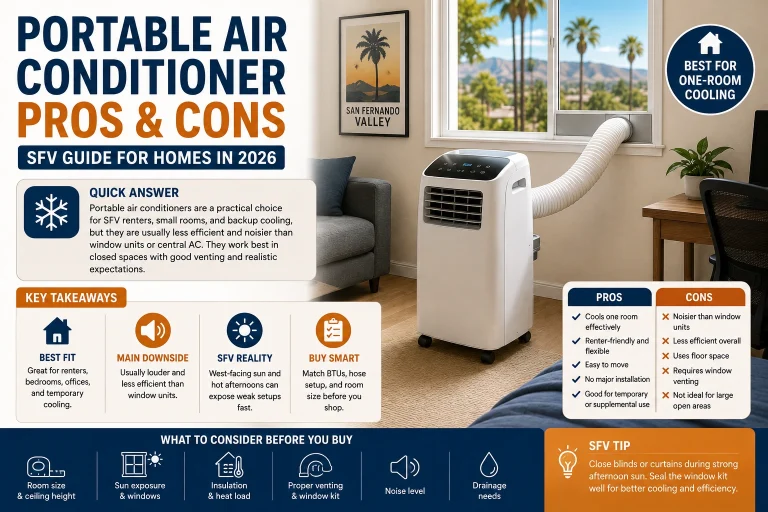
If you are comparing cooling options for a patio that gets intense afternoon heat, it can also help to understand how a portable AC works indoors versus how outdoor misting changes the air outside. They solve different problems, so the best choice depends on where you need relief.
Common Questions
For many large patios, a portable cart-style or strong pedestal model is the most flexible. Wall-mounted units work best when floor space is tight.
Yes, they often feel more effective in dry heat because the mist evaporates faster. They still work best with shade and good airflow.
Place it close enough to cool the seating area, but not so close that people get wet. A little distance usually gives a better balance.
Not always. A bigger tank helps with longer use, but airflow and mist control matter more for comfort.
One fan may be enough for a compact, shaded patio. Bigger or split layouts often work better with two units.
Recommended Products
SHOP THIS SETUP
Lasko Misto Outdoor Misting Fan, 18-Inch Pedestal Fan with Garden Hose Attachment
This is a strong pick for large patios because it combines a full-size oscillating fan with a built-in misting system, giving you both airflow and evaporative cooling in one unit. For San Fernando Valley summers, it’s especially useful when you want a simple plug-and-play setup that can take the edge off dry heat without installing a permanent system.
Frequently Asked Questions
If one fan only cools a small corner or leaves the far side of the patio warm, it may be too small. Long, open, or heavily exposed patios often need more than one unit.
Fan speed usually matters more because it spreads the cooling effect across the patio. Mist helps, but without airflow it can stay too close to the nozzle.
Usually not, unless the setup is already allowed and easy to remove. Renters often do better with portable cart-style or pedestal fans.
Choose clog-resistant nozzles, easy-access parts, and materials that wipe down quickly. Regular cleaning helps a lot in dusty Valley conditions.
Yes, but keep it positioned so mist does not blow onto the cooking area. It is usually better for nearby seating than for direct placement beside the grill.
A mid-range pedestal or cart-style misting fan is often the best value. It usually gives a better mix of airflow, durability, and convenience than the cheapest options.