How to Cool Outdoor Patio Without Ac

The best way to cool an outdoor patio without AC is to combine shade, airflow, and surface changes that reduce heat buildup. In the San Fernando Valley, that usually means a strong shade solution, a well-placed fan, and lighter outdoor materials.
If you live in the San Fernando Valley, you already know a patio can go from pleasant to punishing fast once the sun hits concrete, stucco, and glass. The good news is that you do not need AC to make outdoor space usable again — the right mix of shade, airflow, and surface cooling can make a big difference.
- Shade first: Umbrellas, sails, awnings, and pergolas cut direct sun fast.
- Airflow matters: Outdoor fans and evaporative coolers make dry Valley air feel cooler.
- Surface fixes help: Light rugs, planters, and fabrics reduce heat from concrete and hardscape.
- Match the setup: Renters, apartments, and backyards need different cooling solutions.
Why San Fernando Valley Patios Get So Hot in 2026
SFV patios heat up for the same reason many Valley homes do: long hours of direct sun, dry air, and hard surfaces that soak up and give off heat well into the evening. West-facing yards, open apartment balconies, and back patios with little tree cover can feel especially intense after 3 p.m.
How Valley heat, sun exposure, and reflected heat from concrete affect outdoor comfort
In the Valley, the sun is only part of the problem. Concrete, pavers, block walls, pool decks, and even light-colored stucco can reflect and radiate heat back at you, which makes a patio feel hotter than the thermometer suggests. Add in low airflow between fences or side yards, and the space can trap warm air instead of releasing it.
That is why a patio under a roofline may still feel sticky if the surrounding surfaces are hot. If you are trying to cool a backyard or balcony, think about the whole environment, not just the seating area. Our Backyard Patio guide can help you think through layout choices that affect comfort.
Why evening cooling matters for SFV family dinners, weekend gatherings, and backyard use
Evening comfort matters because that is when many Valley households actually use the patio. After work, after soccer practice, or during weekend BBQs, people want a spot that feels livable without blasting AC indoors or giving up on outdoor time altogether.
For families, a cooler patio can mean kids stay outside longer, dinner feels less rushed, and cleanup is easier when everyone is not overheating. For renters and homeowners alike, improving evening comfort is often the difference between “we never sit out here” and “this is where we hang out.”
In dry Valley weather, moving air can make outdoor spaces feel noticeably cooler even when the temperature does not drop much. That is why shade plus a fan often works better than shade alone.
Choose the Right Shade Strategy for Your Patio Layout
Shade is the fastest way to reduce heat on an outdoor patio without AC. The best option depends on your space, your budget, and whether you need something temporary, renter-friendly, or more permanent.
Shade sails, patio umbrellas, pergolas, retractable awnings, and canopy tents compared
Shade sails are a solid choice for modern patios and awkward layouts because they can cover a large area without bulky posts in the middle of the space. Patio umbrellas are more flexible and budget-friendly, but they usually only cool a small zone at a time.
Pergolas offer a more finished look and can support climbing plants or shade fabric, but they are a bigger investment and usually better for homeowners. Retractable awnings are great for adjustable shade on patios near the house, while canopy tents are useful for temporary gatherings, weekend parties, or renters who need portable coverage.
| Option | Best For | Note |
|---|---|---|
| Shade sail | Medium to large patios | Good coverage, but installation matters |
| Patio umbrella | Small seating areas | Easy and affordable, limited coverage |
| Pergola | Permanent backyard setups | Higher cost, strong visual appeal |
| Retractable awning | Patios near the home | Flexible shade, needs proper mounting |
| Canopy tent | Events and renters | Portable, but less polished for daily use |
Best options for small apartments, townhomes, and single-family backyards in the SFV
For apartment balconies and small townhome patios, a compact umbrella, clip-on shade, or wall-mounted shade sail is often the easiest solution. These setups are easier to manage in tight spaces and usually do not overwhelm the area visually.
For single-family backyards, you have more room to layer shade. A larger umbrella over the dining table, a sail over the play zone, and a pergola or awning near the lounge area can create separate cooler zones without making the yard feel closed in.
If you rent, check your lease and HOA rules before drilling, anchoring, or installing anything permanent. Portable shade usually gives you the most flexibility with the least hassle.
Buying tips: UV rating, wind resistance, size, and installation considerations
Look for shade products with strong UV protection, especially in the Valley where sun exposure is intense for much of the year. Size matters too: a too-small umbrella may look fine online but leave the seating area exposed in real life.
- UV protection and fabric density
- Wind resistance for open yards and balconies
- Coverage size for dining or lounge zones
- Mounting points, weights, or anchors
- How easy it is to remove or store
Price context: budget umbrellas and basic canopy options are usually the most affordable, while retractable awnings and pergolas move into premium territory. If you are comparing options, think about how often you will use the shade and how much setup you are willing to handle each week.
Use Airflow to Make Outdoor Spaces Feel Cooler
Shade blocks heat, but airflow helps your body feel cooler. In dry Valley weather, a well-placed fan can make a patio much more comfortable without needing any built-in cooling system.
Outdoor fans, misting fans, and portable evaporative coolers for dry Valley air
Outdoor fans are the simplest choice for most patios. Misting fans can help when the air is very dry, though they work best in areas where overspray will not make floors slippery or furniture damp.
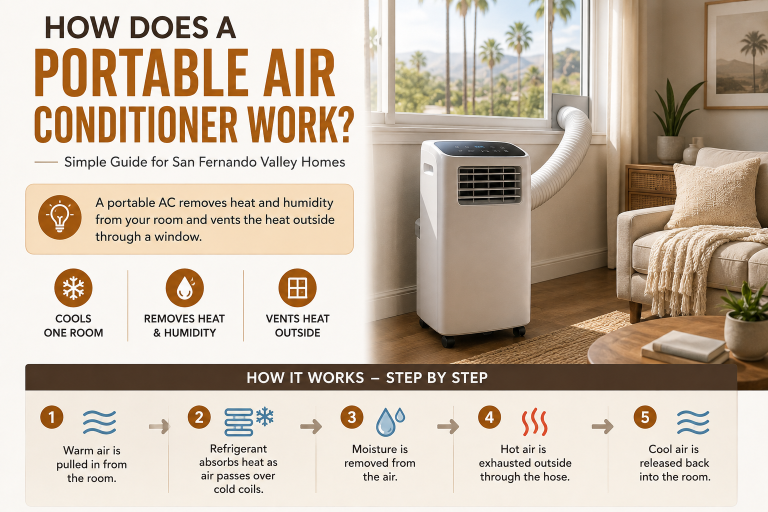
Portable evaporative coolers can be effective in dry climates like the SFV, especially for covered patios or semi-enclosed spaces. If you want a deeper breakdown of how these units work, see our guide on how portable air conditioners work; just keep in mind that portable ACs and evaporative coolers are not the same thing.
Misting systems can make concrete, pavers, and tile slick. Keep them away from walkways, grills, and kid running paths unless you can control the spray carefully.
Where to place fans for dining areas, lounge corners, and kid-friendly play zones
For dining areas, place the fan so it moves air across the table, not straight into someone’s face or across a flame. In lounge corners, a fan aimed diagonally across seating usually feels better than one pointed directly at one person.
If kids use the patio, keep cords, fan bases, and misting equipment out of the main play path. A corner-mounted or wall-adjacent fan can improve comfort without becoming a tripping hazard during busy family time.
Product comparison: battery-powered vs. plug-in vs. weather-rated outdoor fans
Battery-powered fans are great for renters, short-term use, and patios without convenient outlets. Plug-in fans usually offer stronger airflow and are easier for everyday use, but you need a safe outdoor-rated outlet setup.
Weather-rated outdoor fans are the best long-term choice for uncovered or partially covered patios because they are designed to handle more exposure. They usually cost more, but they are a smarter buy if your patio gets regular use.
Reduce Heat from Hard Surfaces and Surroundings
Sometimes the patio itself is the problem. If the ground, furniture, and surrounding walls are all storing heat, your cooling setup has to work harder than it should.
How pavers, decking, planters, rugs, and outdoor fabrics affect patio temperature
Hard, dark, or sun-baked surfaces can make a patio feel hotter underfoot and around seating areas. Lighter decking, shade-friendly rugs, and breathable outdoor fabrics can help reduce how much heat your patio holds onto.
Planters also matter more than people think. Larger plants, especially those with broad leaves, can help break up sun exposure and soften hot edges along fences or walls. Just make sure the plants match the light and water conditions in your yard.
Practical SFV examples: backyard concrete, pool decks, and west-facing patios
A backyard with a big concrete slab often feels hottest in the late afternoon because the slab keeps radiating heat after the sun shifts. Pool decks can be even more intense because you have reflected light, open exposure, and hot walking surfaces all in one place.
West-facing patios are a common Valley headache because they take the brunt of the afternoon sun. If that sounds like your setup, prioritize shade that blocks the low-angle evening sun, not just overhead cover.
Low-cost upgrades that improve comfort without major renovation
You do not need a full remodel to make a patio cooler. Start with a light-colored rug, a few shade-tolerant plants, and furniture cushions in breathable outdoor fabric.
Swapping dark décor for lighter colors can reduce heat absorption and make the space feel less heavy. Even simple changes like moving metal furniture out of direct sun or using a tablecloth during dinner can help.
Build a Cooler Patio Setup for Family Life and Entertaining
The best patio cooling setup is one that fits real life. In the SFV, that usually means a space that works for dinner, homework, BBQs, and quick weeknight hangs without a lot of setup.
Outdoor dining layouts for weeknight meals, kids’ homework time, and weekend BBQs
For weeknight meals, place the dining table in the shadiest area you have and keep the fan nearby but not in the way. If kids use the table for homework or crafts, choose a setup with enough light and airflow that they can stay comfortable for longer stretches.
For weekend BBQs, think about traffic flow. Keep the grill zone separate from the main seating area, and make sure guests have one cooler spot to step into when the heat picks up. If you also enjoy outdoor cooking, our Outdoor Entertaining BBQ section has more ideas for keeping cookouts manageable in warm weather.
Cooling add-ons that work well for grills, kitchen islands, and covered seating areas
Covered seating areas usually benefit from ceiling fans, wall fans, or a strong oscillating fan placed at the edge of the space. Near grills and kitchen islands, airflow should help people stay comfortable without blowing smoke, heat, or grease around the patio.
For a cleaner setup, use portable cooling pieces that are easy to move when you switch from cooking to dining. That flexibility matters in busy households where the patio has to do more than one job.
How to balance comfort, safety, and easy cleanup for busy households
Comfort is important, but so is keeping the patio safe and simple to reset. Choose equipment that is stable, easy to wipe down, and not likely to create clutter around kids, pets, or guests.
- Use weighted bases and secure anchors
- Keep cords away from walking paths
- Choose wipeable cushions and rugs
- Store portable items when not in use
- Using flimsy shade in windy spots
- Placing mist near electronics
- Blocking doorways with oversized gear
- Buying pieces that are hard to clean
When to Shop for Patio Cooling Products in the San Fernando Valley
Timing matters in the Valley. If you wait until the first real heat wave, the best shade and fan options may already be picked over, especially the renter-friendly or high-demand sizes.
Seasonal timing, heat-wave prep, and how to avoid peak-summer shortages
The best time to shop is before the hottest stretch of the year, when selection is better and you have time to compare options. That is especially helpful if you need something delivered, assembled, or installed before family events or summer gatherings.
Heat-wave prep also gives you time to test the setup. A patio that seems fine in mild weather can feel very different once the sun is high and the air is still.
What to look for in 2026: energy use, portability, durability, and weather protection
In 2026, practical buyers should focus on energy use, weather protection, and how easy the product is to move or store. A good patio cooler should fit your routine, not create one more chore.
If you live in a spot with dust, wind, or strong afternoon sun, durability matters just as much as cooling power. Look for materials that can handle regular use and seasonal storage without falling apart quickly.
- Lower heat without running AC
- More usable outdoor time
- Better comfort for kids and guests
- Flexible options for renters and owners
Budget vs. premium picks for homeowners, renters, and frequent entertainers
Budget buyers usually get the most value from umbrellas, portable fans, and simple shade add-ons. Renters often benefit from portable gear they can take with them later.
Premium buyers may prefer retractable awnings, permanent shade structures, or weather-rated fans that blend into the patio design. If you entertain often, spending more on durability and convenience can be worth it over time.
For most SFV patios, the most useful starter combo is a large UV-blocking shade solution plus a weather-rated fan. That pairing usually delivers better comfort than buying one expensive item and hoping it does everything.
Practical Cooling Habits That Work in SFV Weather
Good habits can make a patio feel cooler without any new equipment. In the Valley, small routine changes often matter more than people expect.
Best times of day to use the patio during summer and late-spring heat spikes
Early morning and later evening are usually the most comfortable patio windows in the SFV. Midday and late afternoon are tougher unless you have strong shade and airflow in place.
If you are planning dinner outside, set up early so the seating area is already cool by the time everyone arrives. That way you are not fighting the heat while trying to serve food or wrangle kids.
Simple routines like watering nearby plants, closing off heat sources, and using light-colored décor
Watering nearby plants earlier in the day can help the surrounding area feel fresher, especially if you have a lot of hardscape. Closing blinds or doors on the side of the house that faces the patio can also reduce heat spillover.
Light-colored décor, cushions, and tableware can make the whole space feel less harsh in strong sun. It is a small change, but on a hot Valley afternoon, small changes add up.
How to keep patios usable during family visits, carpool drop-offs, and after-work downtime
For family visits, keep a simple cooling setup ready so you are not scrambling every time guests arrive. For carpool or after-work downtime, a shaded chair and a fan in the right spot may be enough to make the patio worth using for 20 or 30 minutes.
The goal is not to turn your patio into an indoor room. It is to make it comfortable enough that you actually use it more often, even during the hotter months.
Final Recap: The Most Effective Ways to Cool an Outdoor Patio Without AC
If you want to cool an outdoor patio without AC in the San Fernando Valley, start with shade, add airflow, and reduce heat from the surfaces around you. Those three moves do more for comfort than any single product alone.
Top takeaways for shade, airflow, surface cooling, and smart product choices
Choose shade that fits your layout, use a fan or evaporative cooler where air can actually move, and make the patio less heat-absorbing with lighter surfaces and fabrics. Then match the gear to your space, whether that means a balcony, a townhome patio, or a full backyard.
Best next-step checklist for San Fernando Valley homeowners and renters
Start by identifying the hottest part of your patio and the time of day it becomes unusable. Then pick one shade fix, one airflow fix, and one low-cost surface upgrade to test before spending more.
If you want to keep exploring local outdoor comfort ideas, browse the rest of our Home Outdoor Living coverage or our broader Outdoor Cooling category for more SFV-friendly options.
Common Questions
Shade and moving air cool a patio the fastest. A large umbrella or shade sail plus a fan is usually the best starting point.
Yes, especially in dry climates like the San Fernando Valley. They do not lower the temperature, but they make the space feel more comfortable.
It can be, if your patio is dry and you can control overspray. Avoid using it where floors could get slippery.
A compact umbrella, clip-on shade, or portable fan usually works best. These options fit tight spaces and are easier for renters.
Use a light rug, add potted plants, and choose lighter cushions or décor. Even simple changes can reduce heat buildup.
Recommended Products
SHOP THIS SETUP
Lasko Outdoor Living Oscillating Tower Fan
This is a strong pick for hot San Fernando Valley patios because it moves a lot of air without taking up much floor space, making it easy to place near seating or dining areas. It’s built for outdoor use and helps create a noticeably cooler feel during dry, warm evenings when you want comfort without installing AC.
Frequently Asked Questions
The cheapest upgrades are usually a patio umbrella, a basic outdoor fan, and a light-colored rug. These can improve comfort without a major project.
Pergolas can offer more permanent and broader shade, but they cost more and take more planning. Umbrellas are better if you want flexibility or a lower upfront cost.
Yes, especially in dry Valley weather and in semi-covered areas. Just make sure the space has enough airflow and the unit is suitable for outdoor use.
Renters should focus on portable, easy-to-store options like umbrellas, battery fans, and temporary shade. Avoid anything that requires permanent drilling unless your lease allows it.
Use shade that blocks low-angle sun, then add a fan to keep air moving. Lighter surfaces and fabrics also help reduce lingering heat.
Yes, they can reduce heat absorption and make the space feel less intense. They work best as part of a bigger cooling setup, not as the only fix.