Portable Air Conditioner Not Cooling Room

If your portable air conditioner is running but not cooling the room, the problem is usually poor sealing, weak ventilation, a dirty filter, or a room that is too hot for the unit to handle. In the San Fernando Valley, strong sun and heat load can make those issues show up fast.
If your portable air conditioner not cooling room problem is happening in the San Fernando Valley, the issue is often bigger than the machine itself. Between brutal afternoon sun, dry heat, dust, and leaky room setups, a portable unit can feel underpowered fast.
- Check basics first: Mode, filter, thermostat, and remote settings can cause simple cooling failures.
- Seal the room: Window gaps and door leaks can undo portable AC performance fast.
- Watch the venting: Bent hoses and poor exhaust setup are common Valley trouble spots.
- Match the room: Oversized, sunny, or open spaces often need a different cooling solution.
- Fix the room before upgrading: Shading and insulation can help as much as a new unit.
Why a Portable Air Conditioner Isn’t Cooling Your SFV Room: What’s Actually Going On
In the Valley, “not cooling” usually means the unit is running, but the room still feels warm, stuffy, or only slightly better than outside. That can happen even when the AC is technically working.
If you want a deeper refresher on the basics, our guide on how a portable air conditioner works can help you spot whether the problem is the unit, the setup, or the room itself.
How San Fernando Valley heat, sun exposure, and dry air change cooling performance
SFV homes deal with intense sun exposure, especially in west-facing rooms and upstairs spaces. By late afternoon, those rooms can build heat faster than a portable AC can remove it.
Dry air also changes the experience. You may not feel sticky, but you can still feel hot because radiant heat from walls, windows, and roofs keeps pouring in.
Portable ACs cool best when they can remove hot exhaust air efficiently. In a Valley room with weak sealing or a long hose run, they can lose a surprising amount of performance.
Common reader intent: quick fixes for bedrooms, home offices, garages, and apartment spaces
Most people searching this problem want a fast fix for a bedroom that won’t cool overnight, a home office that gets roasted in the afternoon, or a garage conversion that turns into an oven. Renters also want options that don’t require major installation.
The good news: many cooling problems are fixable with setup changes, not a full replacement. The bad news: some rooms in the Valley are simply too hot or too large for a small portable unit to handle well.
First Checks Before You Blame the Unit
Before assuming your portable AC is broken, check the basics. A lot of “bad cooling” complaints come from settings, airflow, or a clogged filter.
Power, mode settings, thermostat placement, and remote-control mistakes
Make sure the unit is in cool mode, not fan-only or dehumidify mode. It sounds obvious, but remote-control mistakes happen all the time, especially when multiple buttons are involved.
Also check where the thermostat sensor is reading from. If the unit is near a hot window, a TV, or a sunlit wall, it may shut off too early or run inefficiently.
If the room feels warm but the AC says it reached the set temperature, move the sensor or remote away from direct sun and try a lower setting for 20 to 30 minutes.
Closed windows, door gaps, and why SFV afternoon heat can overwhelm a small setup
A portable AC needs a sealed room to work well. Even a slightly open door, a cracked window, or a big gap under the door can let in enough hot air to cancel out the cooling.
In SFV afternoons, that extra heat adds up quickly. A setup that feels fine at 8 p.m. may fail completely at 4 p.m. when the sun is still hammering the room.
Filter buildup from dust, wildfire ash, and everyday Valley debris
The Valley collects dust fast, and wildfire smoke or ash can make it worse during certain seasons. A dirty filter restricts airflow and makes the unit work harder while cooling less.
If you haven’t cleaned the filter in a while, start there. It’s one of the easiest fixes and often the most overlooked.
If you notice a burnt smell, heavy dust buildup, or the unit shutting off repeatedly, stop and inspect it before running it longer. Overheating issues can get worse fast in hot weather.
Ventilation Problems That Make Portable ACs Fail in San Fernando Valley Homes
Ventilation is where many portable AC setups fall apart. The machine may be fine, but the hot air it removes has to go somewhere else, and that “somewhere else” matters a lot.
Exhaust hose issues, bent tubing, and warm air leaking back inside
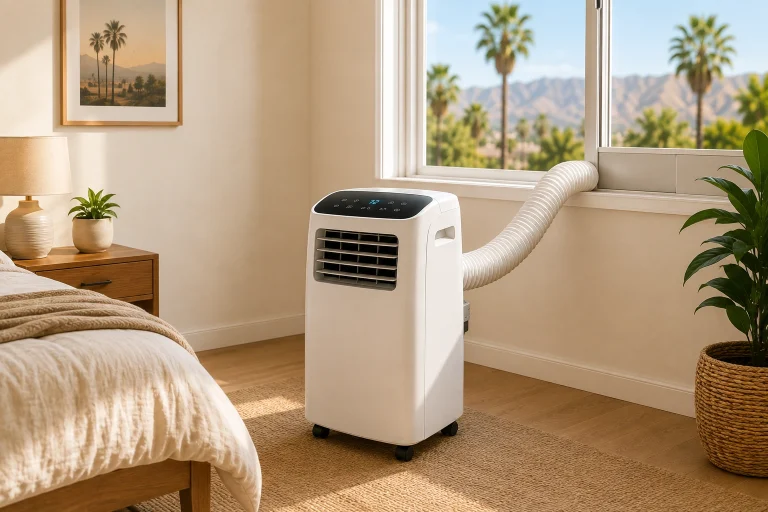
If the exhaust hose is bent, crushed, too long, or poorly attached, the AC loses efficiency. Warm air can also leak right back into the room through loose window seals or gaps around the hose.
That’s especially common in apartments and older homes where the window kit doesn’t fit perfectly. Even small leaks can undo a lot of cooling power.
Single-hose vs. dual-hose performance in hot SFV bedrooms and living rooms
Single-hose units are common and usually cheaper, but they can struggle more in hot Valley rooms because they pull indoor air out and create negative pressure. That can draw warm air back into the room from other gaps.
Dual-hose units generally handle heat better because they separate intake and exhaust. For rooms that face west, get strong sun, or stay hot into the evening, that extra efficiency can matter.
Good sealing often beats a bigger number on the box.
Window kit fit problems in older homes, apartments, and converted garages
Many Valley homes and rentals have window styles that don’t match the standard kit perfectly. Sliding windows, older frames, and converted garage openings can leave awkward gaps.
Those gaps leak hot air in and cool air out. If your room setup is temporary or rented, foam sealing strips and better panel fitting can make a noticeable difference.
Room Size, Layout, and Heat Load: Why Some Spaces Stay Hot
Sometimes the portable AC is working exactly as designed, but the room is simply too demanding. Layout, square footage, and heat sources all change the result.
Oversized rooms, high ceilings, west-facing windows, and sliding glass doors
A portable AC that handles a small bedroom may struggle in a big living room or an open floor plan. High ceilings make the job even harder because there’s more air volume to cool.
West-facing windows and sliding glass doors are especially tough in the Valley. They absorb afternoon heat and keep radiating warmth long after the sun drops.
Kitchen-adjacent rooms, laundry areas, and family spaces that add extra heat
Rooms near kitchens or laundry areas pick up extra heat from appliances, cooking, and dryer cycles. Family rooms also heat up fast when multiple people, electronics, and lights are running at once.
If you’re trying to cool a shared space, the portable unit may be fighting a constant heat source. That’s a harder job than cooling a closed bedroom.
Portable AC ratings are often based on ideal conditions. Real SFV rooms usually have more sun, more leakage, and more heat load than the test setup on the box.
When a portable AC is the wrong match for a garage gym, nursery, or home office
Garage gyms often have poor insulation and major heat gain, so a portable unit may never feel strong enough. Nurseries need stable, quiet cooling, which can be hard to get from a noisy portable model.
Home offices are easier to manage, but only if the room is closed off and shaded. If the space is open to the rest of the house, the AC may be cooling more air than it can handle.
How SFV Weather and Daily Life Affect Portable Cooling Performance
Even a good setup can struggle when the Valley weather and daily routines keep adding heat to the room. That’s why the same unit may feel “fine” one day and useless the next.
Hot afternoons, heat waves, and why nighttime relief may still feel limited
During heat waves, walls, floors, and furniture soak up heat all day and release it slowly at night. So even after sunset, the room may still feel warm for hours.
That’s one reason portable ACs can seem underwhelming in SFV summers. They are often trying to catch up, not just maintain comfort.
Cooking, commuting, pets, and family activity that raise indoor temperatures
Cooking dinner, running the dryer, and having a few people in one room can raise indoor temperatures more than you’d expect. Pets also add body heat, especially in smaller rooms.
If you commute home into a hot house, the room may already be heat-soaked before the AC even starts. That makes quick cooling much harder.
Outdoor living spillover: patios, open doors, and airflow from inside to outside
SFV homes often blur the line between indoors and outdoors. If patio doors are open, people are going in and out, or fans are pulling air the wrong way, cool air escapes fast.
That’s great for airflow in mild weather, but not great when you’re trying to trap cold air in one room. For portable ACs, closed-space discipline matters.
Portable Air Conditioner Comparisons: What Works Better for Valley Homes in 2026
If your portable AC keeps disappointing you, it may be time to compare cooling options instead of forcing one machine to do everything. The best choice depends on your room, your lease, and your energy tolerance.
Portable AC vs. window AC vs. evaporative cooler in dry Inland Valley conditions
| Option | Best For | Note |
|---|---|---|
| Portable AC | Renters, flexible setups, small to medium rooms | Easy to move, but usually less efficient than window units |
| Window AC | Bedrooms and offices with a proper window fit | Often cools better because it vents heat more directly |
| Evaporative cooler | Dry conditions and open-air spaces | Can help in dry heat, but not ideal in closed or humid rooms |
For many Valley homes, a window AC still beats a portable unit for raw cooling. Evaporative coolers can make sense in dry conditions, but they work best when airflow and room type are a good match.
BTU ratings, inverter models, and dehumidification features that matter most
BTU rating matters, but it’s not the whole story. A higher number won’t fix a leaky window kit or a sun-baked room with poor insulation.
Inverter models can offer smoother operation and better efficiency, while dehumidification features may help comfort in some situations. Still, the real winner is the unit that matches your room and setup.
Noise, mobility, and energy use for renters, families, and hybrid work setups
Portable ACs are popular because they roll from room to room, but that flexibility comes with trade-offs. They can be noisy, take up floor space, and use more energy than many people expect.
For renters and hybrid workers, the best unit is often the one that balances comfort, noise, and convenience. If you work from home, a quieter model may be worth the higher upfront cost.
Buying Tips for SFV Shoppers Who Need Real Cooling, Not Just Cold Air Claims
If you’re shopping for a replacement, don’t get distracted by flashy claims. Focus on room fit, venting quality, and how the unit will actually perform in a Valley home.
How to size BTUs for bedrooms, ADUs, and multi-use rooms
Start with the room type, not just the square footage. Bedrooms usually need less than open living areas, while ADUs and multi-use rooms may need a stronger setup because of extra windows, heat, or occupancy.
- Room size and ceiling height
- Sun exposure and window direction
- Insulation quality and air leaks
- Whether the room is closed off or open-plan
- How often the space is used during peak heat
What to look for in hose length, window kits, filters, and smart controls
Shorter hose runs are usually better, and a snug window kit can make a bigger difference than people think. Easy-to-clean filters are also worth prioritizing in the Valley because dust builds up fast.
Smart controls can help if you want to pre-cool a room before you get home from work. That’s handy for commuters who arrive after the hottest part of the day.
If you’re shopping locally or online, look for a setup that includes a solid window seal solution, not just the AC unit itself. In SFV, sealing is often the difference between “okay” and “finally comfortable.”
When to choose a better unit, add insulation, or upgrade room shading first
Sometimes the smartest move is not buying a bigger AC right away. If your room has thin curtains, direct sun, or obvious leaks, improving shading and insulation may give you the fastest payoff.
For budget shoppers, that can be the most practical path. For mid-range and premium buyers, it may still be worth fixing the room first so the new unit can do its job properly.
For SFV rooms that overheat in the afternoon, a portable AC with a strong window sealing kit and easy-clean filter is usually a smarter buy than chasing the highest BTU number alone.
Practical Recap: Fast Fixes and Smarter Next Steps for a Portable AC That Won’t Cool
If your portable AC is running but the room still feels hot, the fix is usually one of four things: settings, sealing, ventilation, or room overload. Start with the easiest checks before replacing the unit.
Simple troubleshooting checklist for immediate improvement
Clean the filter, confirm the mode, check the thermostat placement, and inspect the exhaust hose for bends or leaks. Then close the room tightly and block direct sun as much as possible.
- Seal window gaps and door leaks
- Shorten and straighten the exhaust hose
- Clean the filter regularly
- Running the unit with an open door
- Using a long, kinked hose run
- Expecting one portable AC to cool an oversized open space
Best long-term solutions for SFV households, commuters, and family spaces
For many Valley households, the long-term answer is better room prep, a more efficient unit, or a different cooling method altogether. Window ACs often outperform portables in sealed bedrooms, while evaporative cooling may suit drier, more open setups.
If you commute, work from home, or manage a family room that stays busy all day, think about the room’s heat load first. That will save you more frustration than chasing another portable unit that looks powerful on paper.
Final guidance on when to repair, replace, or switch cooling methods
Repair the unit if the issue is simple airflow, filter buildup, or a minor hose problem. Replace it if the machine is old, noisy, or underpowered for the room even after setup fixes.
Switch cooling methods if the room is too large, too sunny, or too open for a portable AC to handle reliably. In the San Fernando Valley, that honest call often matters more than brand loyalty or marketing claims.
Recommended Products
SHOP THIS SETUP
Whynter ARC-14S Dual Hose Portable Air Conditioner
This dual-hose model is a strong pick for readers whose portable AC isn’t cooling well because dual-hose units are typically more efficient than single-hose designs, especially in hot Southern California rooms with lots of sun exposure. It also has a solid reputation for stronger cooling performance and can be a practical upgrade for SFV homes where afternoon heat and poor venting make smaller units struggle.
Frequently Asked Questions
The most common causes are a dirty filter, wrong mode setting, poor venting, or a room that is too hot or too large for the unit. In the San Fernando Valley, sun exposure and air leaks can make the problem feel worse.
Afternoon heat, direct sun, and heat-soaked walls can overwhelm a portable unit during the hottest part of the day. At night, the room may still be cooling down from that stored heat, so the AC seems to work better.
It can work in smaller, well-sealed bedrooms, but single-hose models often struggle more in hot Valley conditions. Dual-hose units usually perform better when the room gets strong sun or runs hot for long periods.
If the unit runs constantly and the room never gets comfortably cool, the space may be too large, too open, or too leaky. High ceilings, west-facing windows, and nearby heat sources can also make the room harder to cool.
If your room is sealed well and still not cooling, a bigger or better-designed unit may help. But if you have a proper window fit, a window AC often cools more effectively than a portable model.
Start by cleaning the filter, checking the mode, and sealing the window kit and door gaps. Then straighten the exhaust hose and block direct sun to reduce heat gain.