Solar Powered Outdoor Misting Fan How It Works

A solar powered outdoor misting fan uses sunlight to run a fan and, in many models, a small water pump that creates a fine cooling mist. It works best in hot, dry outdoor spaces like SFV patios, driveways, and backyards.
In the San Fernando Valley, outdoor comfort is less about “nice weather” and more about surviving long stretches of dry heat, bright sun, and hot patios that hold warmth well into the evening. A solar powered outdoor misting fan gives you a simple way to cool a small outdoor space without relying on a wall outlet all day. If you want the basics first, this guide explains the outdoor cooling side of the idea in plain English.
At a high level, the system uses sunlight to power a fan and, in many models, a small pump that pushes water through misting nozzles. The fan moves air, the mist adds evaporative cooling, and together they can make a patio, driveway, or side yard feel much more livable during SFV heat.
- How it works: Sunlight powers the fan and misting pump.
- Best SFV use: Patios, driveways, side yards, and BBQ areas.
- Buy smart: Check panel size, battery backup, and nozzle quality.
- Maintenance: Clean nozzles and watch for mineral buildup.
- Reality check: Great for outdoor comfort, not indoor AC replacement.
What a Solar Powered Outdoor Misting Fan Does in SFV Heat
Why San Fernando Valley backyards, patios, and driveways need more than shade
Shade helps, but in the Valley it often is not enough on its own. Concrete, stucco walls, pavers, and fences absorb heat during the day and release it later, which is why a shaded patio can still feel warm after sunset.
That is especially true in areas with strong afternoon sun, like many backyards and driveways across the SFV. Add dust, reflected glare, and limited airflow between houses, and you get the kind of outdoor space that looks usable but does not always feel comfortable.
The basic job of the fan, misting system, and solar panel working together
The solar panel collects energy from the sun and turns it into electricity. That electricity runs the fan, and in many units it also supports a small water pump or charges a battery that helps the system keep going when sunlight shifts.
The fan pushes air across the mist. As tiny water droplets evaporate, they pull heat from the surrounding air, which creates a noticeable cooling effect. It is not the same as air conditioning, but for outdoor use it can make a real difference.
How the System Works Step by Step
How sunlight becomes power for the fan and pump
Solar panels use photovoltaic cells to capture sunlight and convert it into direct current electricity. In a simple setup, that electricity may run the fan directly when the sun is strong enough.
In more flexible systems, the panel charges a battery or powers a controller. That gives the fan and pump more stable operation when the sun changes, which matters a lot in late afternoon when the Valley is still hot but shadows are getting longer.
The panel collects solar energy and converts it into electricity for the system.
The fan starts moving air while the pump sends water toward the misting nozzles.
Fine droplets evaporate into the hot air, dropping the felt temperature around the seating area.
How water is drawn, pressurized, and turned into a cooling mist
Most solar misting fans use a small tank, hose connection, or water reservoir. A pump moves the water through narrow lines and out of tiny nozzles, which break it into a fine mist instead of heavy droplets.
The smaller the droplet size, the faster it evaporates. That is the key to the cooling effect. If the mist is too coarse, you get wet chairs and damp clothing instead of comfortable air.
In very dry heat, misting works best when the droplets stay fine and the fan has enough airflow to keep water from settling on nearby surfaces. Poor nozzle quality can leave puddles or sticky overspray.
What happens on partly cloudy days, late afternoons, and peak heat hours
On partly cloudy days, a solar powered fan may still work well, but output can dip when clouds block direct sun. If the system includes a battery, it can smooth out those dips and keep the fan more consistent.
Late afternoons are a mixed bag in the SFV. The sun angle drops, but heat can still linger, so battery backup or a well-placed panel can help extend useful runtime. During peak heat hours, direct sunlight usually gives the strongest performance, which is also when you are most likely to want it.
Solar misting fans are best thought of as outdoor comfort tools, not full-space coolers. They work best when air can move freely and when the mist has room to evaporate.
Why This Matters for Everyday SFV Outdoor Living
Cooling patio dinners, weekend BBQs, and kids’ play areas in Valley heat
For many families, the real value is simple: you can stay outside longer. A misting fan can make patio dinners less sweaty, BBQ prep more manageable, and play areas more tolerable during hot stretches.
If you are already planning outdoor entertaining, it fits naturally into the same setup as seating, shade, and a grill. For more ideas on making the most of that space, see our guide to outdoor entertaining and BBQ.
Making front yards, side yards, and garage workspaces more usable
Not every SFV home has a big backyard. Some of the most useful spots are front patios, narrow side yards, and garage-adjacent work areas where airflow is poor and surfaces heat up fast.
A portable or wall-mounted misting fan can make those spaces more usable for folding laundry, doing a quick repair, or just sitting outside for a break. That matters in neighborhoods where outdoor square footage is limited and every inch has to work harder.
Using misting fans for pet comfort, gardening breaks, and family gatherings
Pets feel the heat too, especially on hard surfaces like concrete or pavers. A misting fan can help create a more comfortable rest area, as long as the spray is light and does not soak the space.
Gardeners and weekend DIYers also benefit from short cooling breaks. In the Valley, even a 10-minute rest in a shaded, misted zone can make outdoor chores feel more manageable.
The cooling effect from misting comes mostly from evaporation, not from making the air “cold.” That is why these fans often feel best in hot, dry conditions like much of the SFV.
Solar Misting Fan Types and Which One Fits SFV Homes
Portable vs. wall-mounted vs. pedestal models for patios and pool areas
Portable models are the easiest for renters and people who want flexibility. You can move them from the patio to the driveway or tuck them away when not in use.
Wall-mounted units save floor space and work well in smaller patios or tight side yards. Pedestal models sit somewhere in between, offering decent coverage without permanent installation. The right choice usually depends on how often you move furniture, how much shade you have, and whether you want a fixed setup.
| Option | Best For | Note |
|---|---|---|
| Portable | Renters, flexible patios | Easy to move, but may have smaller tanks or lighter frames |
| Wall-mounted | Compact yards, fixed seating | Good space saver, but less flexible |
| Pedestal | Family patios, pool edges | Balanced coverage, often easier to aim |
Battery backup models for evening use and shaded corners
Battery backup is worth paying attention to if you want the fan to keep going after the sun shifts behind a house or tree. In the Valley, that can matter a lot because many outdoor spaces are partly shaded by late afternoon, even on very hot days.
Battery-equipped units usually cost more, but they are more practical if your patio gets sun in the morning and shade later. They are also useful for renters who cannot run a dedicated electrical line.
Comparing misting fans with standard outdoor fans, evaporative coolers, and hose-fed mist systems
Standard outdoor fans move air but do not lower the temperature much on their own. Evaporative coolers can cool better, but they are usually larger and less portable, and they may need more power and water management.
Hose-fed mist systems can cover a wider area, but they are less self-contained. A solar powered misting fan is often the simplest middle ground for SFV homes that want a compact, lower-energy option without a full outdoor cooling buildout.
What to Look for Before Buying in 2026
Solar panel size, battery capacity, and runtime in real Valley conditions
Look for a panel that matches the fan’s power needs instead of assuming “bigger is always better.” What matters most is whether the system can keep the fan moving at the speed you want during bright sun and whether the battery, if included, can carry it through cloud cover or late-day use.
In budget models, runtime may be limited and performance can vary more with weather. Mid-range and premium units usually offer better consistency, but the right choice still depends on how often you will use it and how much shade your yard gets.
Water tank size, mist output, and nozzle quality for dry, dusty air
In the SFV, dust and dry air can make nozzle quality more important than many buyers expect. Fine, consistent mist performs better than a rough spray that leaves spots or clogs easily.
Tank size matters too. A larger tank can mean fewer refills, which is helpful for long BBQs, family gatherings, or weekend projects. Just remember that more water capacity can also mean a heavier unit.
- Fine mist nozzles that resist clogging
- A tank or hose setup that matches your use time
- Adjustable mist levels for different heat conditions
- Easy access for cleaning and refilling
Noise level, build materials, and UV resistance for long-term outdoor use
Noise matters more than people think, especially on small patios and in townhome courtyards. A loud fan can drown out conversation and make the space feel less relaxing.
Also look for UV-resistant plastics, corrosion-resistant hardware, and a frame that can handle long sun exposure. The Valley sun is hard on outdoor gear, and cheaper materials can fade, crack, or weaken faster than expected.
Budget vs. premium features for SFV families, renters, and homeowners
Budget models are fine if you want a simple, occasional-use solution. They are often the best fit for renters, first-time buyers, or anyone testing whether misting actually helps their space.
Premium models make more sense if you plan to use the fan often, want better battery support, or need sturdier materials for a more permanent outdoor setup. If you are comparing options, it can help to think in terms of comfort, durability, and how much maintenance you are willing to do.
Best Use Cases Around the San Fernando Valley
Backyard entertaining in neighborhoods with strong afternoon sun
In many SFV neighborhoods, afternoon sun is the main reason people move the party inside early. A misting fan can extend the usable window for dinner, drinks, and conversation without turning the patio into a heat trap.
That is especially useful for homes with western exposure, where the sun hits hard late in the day. If your backyard gets blasted for hours, a solar unit can help make the space feel less punishing.
Cooling a driveway or car-washing setup without running extension cords
Driveways are another good use case because they are often wide open, sunny, and far from outlets. A solar powered misting fan can make car washing, loading gear, or working on a project car a lot more comfortable.
It also avoids the hassle of dragging cords across walkways. For commuters and weekend tinkerers, that simplicity is a real plus.
Adding comfort to outdoor homework time, family meals, and weekend projects
Parents often need a space where kids can sit outside for a little while without overheating. A misting fan can create that pocket of comfort for homework, snacks, or supervised play.
It is also handy for outdoor chores and hobby time. Whether you are repotting plants, assembling furniture, or cleaning up after a gathering, a little airflow and mist can make the job feel less draining.
When a misting fan is better than AC and when it is not
A solar powered misting fan is better than AC when you want to cool an outdoor area, save electricity, or avoid running indoor systems just to make the patio bearable. It is also a strong choice when your goal is flexible, targeted comfort.
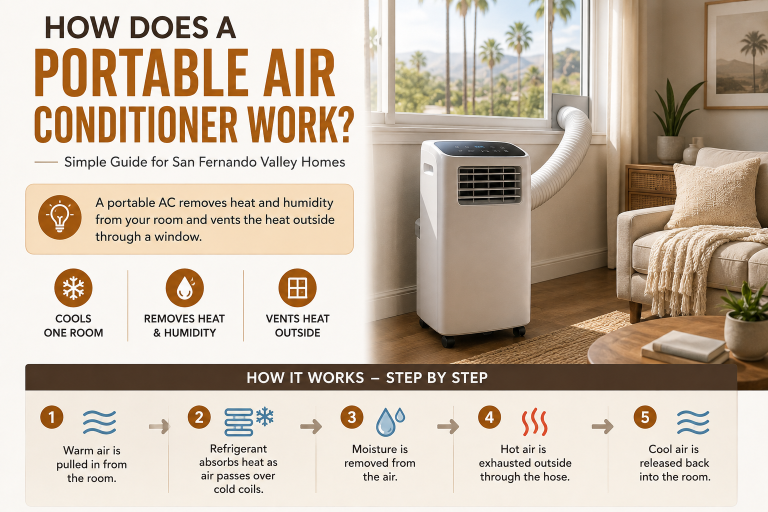
It is not a replacement for air conditioning inside a hot home. If you need to cool a sealed room, a portable AC or central system is the right tool, which is why some readers also compare it with a portable air conditioner for indoor spaces.
Installation, Maintenance, and Water-Saving Tips
Where to place the panel for maximum sun in SFV yards and patios
Panel placement can make or break performance. In the Valley, you usually want the panel where it gets the longest stretch of direct sun, not where it looks neatest on the wall.
Try to avoid deep shade from overhangs, trees, or neighboring structures. If the panel has to sit at an angle, make sure it is secure and not exposed to wind or accidental bumps.
If you are buying for a typical SFV patio, choose a solar misting fan with an adjustable head, a removable tank, and a panel you can aim toward the strongest afternoon sun. That combination usually gives the best balance of comfort and convenience.
How to clean nozzles, manage mineral buildup, and protect the pump
Cleaning matters because mineral buildup can clog tiny misting nozzles over time. If your water is hard, you may need to clean the system more often than you expect.
Rinse the tank, check the nozzles, and follow the manufacturer’s cleaning instructions regularly. Protect the pump by avoiding dry runs and storing the unit properly when it is not in use for long stretches.
- Use clean water when possible
- Flush the nozzles on a routine schedule
- Store the unit out of direct weather when not in use
- Letting hard-water deposits sit for months
- Running the pump without water
- Leaving plastic parts baking in full sun year-round
Simple ways to reduce water use while keeping the cooling effect strong
Use the lowest mist setting that still feels comfortable. Point the fan so the mist crosses the seating area instead of spraying directly at people or furniture.
Running the fan only when the space is occupied also helps. In the SFV, that small habit can save water without giving up the comfort boost that makes the unit worthwhile.
Practical Recap: Is a Solar Powered Outdoor Misting Fan Worth It for SFV Homes?
Who benefits most from this cooling setup in the Valley
This setup makes the most sense for people who spend time outdoors but do not want to run cords, install a large cooling system, or waste energy cooling empty air. That includes homeowners with patios, renters with small yards, families with kids, and anyone who uses a driveway or side yard as bonus living space.
It is especially helpful in hot, dry, sunny parts of the Valley where shade alone still leaves you uncomfortable.
Quick buying and setup takeaways for safer, cooler outdoor living
Choose a model with enough solar power, a mist pattern that stays fine, and materials that can handle UV exposure. If you expect evening use or cloudy-day reliability, battery backup is worth a closer look.
Set it up where it gets the most sun, clean it regularly, and keep expectations realistic. A solar powered outdoor misting fan can make SFV outdoor living a lot more pleasant, but it works best as a smart comfort upgrade, not a full replacement for indoor cooling.
Common Questions
It moves air and adds a fine mist to help people feel cooler outside. The solar panel provides the energy needed to run the system.
Yes, especially in dry heat and strong sun. It can make patios, driveways, and backyard seating areas more comfortable.
Not always, but it helps if you want more reliable evening or cloudy-day use. It is worth considering for shaded yards.
Usually not as much as a bigger outdoor cooling setup, but usage depends on mist level and runtime. Using the lowest effective setting helps save water.
No, it is meant for outdoor spaces. It is a comfort tool, not a replacement for indoor air conditioning.
Recommended Products
SHOP THIS SETUP
Avid Power 20V Cordless Misting Fan
This is a strong pick for readers who want the closest thing to a solar-friendly outdoor cooling setup without needing a hardwired outlet. The cordless design makes it easy to pair with a solar charging setup or use in sunny SFV patios, garages, and backyard gatherings where portability matters.
Frequently Asked Questions
It uses sunlight to power a fan and, in many models, a small pump that pushes water through fine nozzles. The droplets evaporate in the air, which makes the space feel cooler.
It may still work in partial sun, but performance can drop. A battery backup helps keep the fan more consistent when clouds or shade reduce solar input.
Patios, driveways, side yards, and BBQ areas are common fits. These spaces usually get strong sun and benefit from targeted outdoor cooling.
Clean them regularly and flush out mineral buildup when needed. If your water is hard, maintenance becomes even more important.
That depends on the model and fan size. Quieter units are better for dining areas and small patios where conversation matters.
Look at solar panel strength, battery support, mist quality, and UV-resistant materials. Those features usually matter more than flashy extras for long-term outdoor use.