How to Install Misting Fan on Pergola

Install a pergola misting fan by confirming the structure can support the mount, routing water and power safely, and placing the fan over the main seating area. In the San Fernando Valley, the best results usually come from pairing mist with shade and keeping up with nozzle cleaning and hard-water maintenance.
Installing a misting fan on a pergola can make a San Fernando Valley patio feel usable again during those long, dry, late-afternoon heat stretches. If your backyard gets blasted by sun and warm air, the right setup can add real comfort without turning the space into a full construction project.
- Check structure first: Mount only to strong pergola beams.
- Plan for SFV heat: Shade plus mist works better than shade alone.
- Keep lines tidy: Avoid trip hazards and messy outdoor routing.
- Expect upkeep: Hard water and dust can clog nozzles.
- Match the fan to the space: Size matters for comfort and noise.
Why San Fernando Valley Pergolas Need Better Cooling in 2026
In the Valley, a pergola gives you shade, but shade alone often stops being enough once the sun shifts and the air stays hot. A misting fan helps move air and add a light cooling effect, which can make a patio more practical for dining, relaxing, or keeping kids outside a little longer.
How SFV heat, dry air, and late-afternoon sun affect backyard comfort
San Fernando Valley weather tends to bring hot afternoons, dry air, and strong sun exposure that lingers on west-facing yards. That combination can make a shaded pergola feel more like a warm shelter than a cool retreat, especially during summer and early fall.
Dry air actually helps mist evaporate faster, which is why misting systems can work well here. The catch is that the same dry conditions also mean dust, mineral buildup, and evaporation loss can become part of the maintenance picture.
Why a misting fan can outperform shade alone for Valley patios
A pergola blocks direct sunlight, but a misting fan adds airflow and a cooling layer that can help the space feel noticeably better. For many SFV homeowners, that combination is more useful than adding another shade layer alone.
What to Know Before You Install a Misting Fan on a Pergola
Before you drill holes or run tubing, it helps to check whether your pergola can support the fan safely and whether your yard layout makes the install practical. A little planning up front can save you from leaks, wobble, or a setup that barely cools the seating area.
Choosing the right pergola material, size, and mounting strength
Wood, aluminum, and composite pergolas all need different mounting approaches. A sturdy structural beam is the goal, not just a decorative slat, because a fan adds vibration and weight that weak attachment points may not handle well.
- Pergola beam thickness and structural support
- Fan weight and vibration during operation
- Space between the fan and seating area
- Exposure to direct sun, wind, and dust
Understanding water access, power access, and backyard layout in SFV homes
Water access matters just as much as fan placement. If your hose bib is far from the pergola, or your outlet is on the opposite side of the yard, the install becomes more complicated and may need longer tubing, weather-safe routing, or professional help.
In many SFV homes, the best route is the one that keeps lines tidy and out of foot traffic. That matters even more on patios where people carry food, kids run around, or you already have cords for lighting and speakers.
If your pergola sits near a pool, grill, or walkway, plan for splash, slip, and cord-management issues before you mount anything.
When a DIY setup makes sense versus hiring a local installer
DIY can make sense if your pergola is structurally sound, your water source is close, and you’re comfortable with basic tools. If the mount needs electrical work, custom routing, or anything that feels shaky, a local installer may be the safer call.
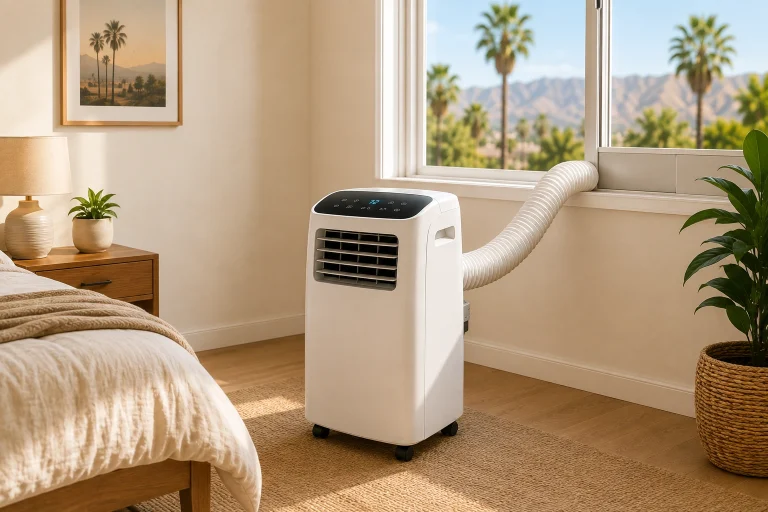
That trade-off is especially important for renters and HOA neighborhoods, where visible changes may need approval or later removal. If you want a more temporary cooling option, you may also want to compare it with a portable air conditioner for enclosed or semi-enclosed outdoor rooms.
Best Misting Fan Types for Pergola Use in the San Fernando Valley
Not every misting fan works the same way, and the best choice depends on how your pergola is built and how you use the space. For example, a quiet family patio has different needs than a larger entertaining area with more open airflow.
Ceiling-mounted misting fans vs. wall-mounted and standing units
Ceiling-mounted units are often the cleanest option for a pergola because they keep the floor clear and aim airflow downward where people sit. Wall-mounted fans can work well on side beams, while standing units are easier to move but take up space and may look less integrated.
| Option | Best For | Note |
|---|---|---|
| Ceiling-mounted | Permanent pergola setups | Best for clean coverage if the structure is strong |
| Wall-mounted | Side-beam installations | Useful when center mounting is not possible |
| Standing unit | Flexible or temporary cooling | Easier to move, but less seamless |
Low-pressure vs. high-pressure misting systems for dry Valley weather
Low-pressure systems are usually simpler and more budget-friendly, but they can create larger droplets and more wetness near the fan. High-pressure systems typically produce a finer mist, which can feel better in dry heat if installed correctly and maintained well.
For San Fernando Valley conditions, the better choice often depends on how close people will sit to the fan and how much moisture your patio can handle. If you want a drier feel and cleaner mist, high-pressure tends to be the more refined option, but it also usually costs more.
Because prices vary by size, pressure rating, and installation needs, it’s best to shop by category rather than chase a single “best” number. Budget systems are simpler, mid-range kits usually add better control, and premium setups often focus on finer mist and longer-lasting materials.
Comparing noise, coverage, and energy use for family patios
Noise matters if you use the patio for dinners, homework, or quiet evenings. A fan that is too loud can become annoying fast, even if the mist works well, so it’s worth balancing coverage with sound level and energy use.
- Choose a fan sized for the seating zone, not the whole yard
- Look for quiet operation if you host family meals outside
- Check that the mist pattern matches your layout
- Picking the biggest fan without measuring the pergola
- Assuming more mist always means better cooling
- Ignoring how wind affects coverage
Tools, Parts, and Buying Tips for a Clean Installation
A neat install depends on having the right hardware before you start. It also helps to buy parts that can handle Valley sun, dust, and occasional hard-water wear instead of the cheapest option available.
Must-have hardware: brackets, anchors, tubing, nozzles, and shutoff valves
Most pergola installs need a secure fan bracket, the right anchors for your beam material, misting tubing, nozzles, and a shutoff valve for control and maintenance. If you’re using a hose connection, add fittings that reduce leaks and make seasonal removal easier.
- Mounting brackets matched to pergola material
- Anchors or lag screws sized for structural support
- UV-resistant mist tubing
- Replaceable nozzles for easier cleaning
- Shutoff valve for quick control and winterizing
What to look for when shopping in 2026: rust resistance, UV durability, and water efficiency
Outdoor gear in the Valley gets a lot of sun, so rust resistance and UV durability matter more than flashy features. Metal parts should resist corrosion, and plastic parts should be rated for outdoor use so they do not crack or fade too quickly.
Cheaper outdoor hardware can look fine at first, then warp, rust, or clog after a season of heat and hard water.
Picking fan size and mist output for small courtyards, pool decks, and larger entertainment spaces
Small courtyards usually need a compact fan with controlled mist output, while pool decks and larger entertainment spaces may need broader coverage or multiple units. The right size is the one that cools the people, not just the air around the pergola.
In dry climates, mist can feel more effective when paired with airflow, because moving air helps evaporation do the cooling work.
Step-by-Step: How to Install a Misting Fan on a Pergola
Once you’ve chosen the fan and gathered the parts, the install is mostly about secure mounting, clean routing, and testing before regular use. Take your time here; a tidy setup is safer and usually performs better.
Planning the fan location for airflow, seating zones, and sun exposure
Start by standing under the pergola at the time of day you actually use it. In many SFV yards, the late-afternoon sun angle changes where people naturally sit, so place the fan to cool the main seating zone rather than the empty side of the structure.
Try to center the fan where it can move air across the whole gathering area without blowing directly into someone’s face all the time. If you have a dining table, leave enough clearance so the fan does not interfere with chairs, lights, or hanging decor.
Securing the mount safely to wood, aluminum, or composite pergola beams
Use hardware that matches the pergola material and follow the fan’s mounting instructions closely. Wood often allows easier fastening, while aluminum and composite may require specific brackets or reinforcement to avoid damage.
Do not attach to decorative slats if the fan needs a structural anchor point. If you are unsure which beam is load-bearing, stop and confirm before drilling, because a weak mount can loosen over time from vibration and heat expansion.
For SFV pergolas, prioritize a corrosion-resistant mounting kit and UV-rated tubing over decorative extras. Those two details usually matter more after the first hot season.
Running the water line neatly without creating a trip hazard
Route the water line along beams, posts, or other protected edges whenever possible. Use clips or fasteners designed for outdoor use so the line stays neat and does not droop into walking paths or seating areas.
If the line must cross an open area, keep it elevated or shielded. A clean route is not just about looks; it also reduces the chance of someone tripping or pulling the line loose during a busy backyard gathering.
Connecting power, testing mist coverage, and checking for leaks
Connect power only after the fan is mounted securely and the water line is in place. Then test the system in short bursts, watching how the mist spreads and whether any fittings drip, spray unevenly, or pool water where people walk.
Adjust the angle and nozzle direction before you call the job done. A few small changes can make the difference between comfortable cooling and an over-wet patio floor.
Local SFV Installation Challenges to Watch For
San Fernando Valley conditions can be tougher on outdoor cooling gear than a mild coastal climate. Heat, dust, hard water, and wind all affect how well a misting fan performs and how much upkeep it needs.
Hard water buildup, mineral scaling, and nozzle maintenance in the Valley
Hard water can leave scale inside nozzles and fittings, which reduces mist quality over time. If your water supply leaves mineral deposits on outdoor fixtures, expect to clean or replace nozzles more often.
Simple maintenance helps a lot: flush the line, inspect the nozzles, and keep an eye out for white residue or uneven spray. That kind of attention can keep the system working better through the hottest months.
Wind, dust, and heat waves: how to keep mist effective on hot afternoons
Wind can push mist away before it cools the seating area, especially on open patios. Dust and heat waves also make it harder for the system to feel refreshing, so the best setup is usually one that stays somewhat sheltered and aimed carefully.
If your pergola is very open, a misting fan may still help, but it will work best when combined with shade and smart placement. In extreme heat, think of it as comfort support, not full climate control.
HOA, rental, and neighborhood considerations for visible outdoor upgrades
Some neighborhoods care about visible changes, especially if tubing or hardware can be seen from the street or neighboring yards. Renters should also check lease rules before drilling into a pergola or adding semi-permanent fixtures.
If you want a lower-commitment approach, choose removable parts and cleaner routing. That makes it easier to take the system down later without leaving obvious marks or holes.
How to Use a Misting Fan for Everyday SFV Outdoor Living
A pergola misting fan works best when it becomes part of your routine, not just a novelty for one hot weekend. The real value is making the patio usable more often for meals, playtime, and relaxed evenings.
Making the patio usable for weekend BBQs, kids’ playtime, and evening gatherings
For weekend BBQs, the fan can help keep the cooking and seating area more comfortable while guests gather. For kids, it can make short outdoor play sessions more manageable during hotter parts of the day, especially if the area is shaded.
For evening gatherings, the fan can take the edge off lingering heat after sunset. That is a big deal in the Valley, where patios often stay warm long after the sun goes down.
If your family spends a lot of time outside during school breaks, a cooler patio can make those afternoons easier to handle. It may even help the backyard compete with screen time when the weather is rough.
Pairing the fan with shade sails, outdoor curtains, and landscaping for better cooling
The best cooling setups usually combine airflow with shade. Shade sails, outdoor curtains, and strategic landscaping can reduce direct sun and help the misting fan do its job more efficiently.
Plants and screens can also soften wind and create a more comfortable microclimate. Just make sure nothing blocks the fan too much, or you may reduce the airflow you actually need.
Seasonal tips for spring, summer, and early fall in the San Fernando Valley
In spring, test the system before the first real heat wave so you can fix leaks or clogs early. In summer, check nozzles more often and use the fan during the hottest part of the afternoon instead of running it all day.
In early fall, the Valley can still stay warm enough to make the fan worthwhile, especially on west-facing patios. Once the weather cools, shut the system down cleanly and store or protect parts that do not need to stay outside.
Practical Recap: The Smartest Way to Install and Enjoy a Pergola Misting Fan
The smartest install is the one that fits your pergola structure, your water and power layout, and your actual backyard habits. If the system is secure, easy to maintain, and placed where people sit, it is much more likely to get regular use.
Quick checklist for safe installation, efficient cooling, and long-term maintenance
Before you finish, confirm that the mount is secure, the water line is tidy, and the fan covers the main seating area without over-wetting the floor. Then plan a simple maintenance routine for cleaning nozzles, checking fittings, and watching for wear.
Best next steps for SFV homeowners who want a cooler backyard this year
Measure your pergola, map your water and power access, and decide whether the project is simple enough for DIY. If not, getting help from a local installer can save time and reduce the risk of a messy or unsafe setup.
For many San Fernando Valley homes, a well-installed misting fan is one of the most practical outdoor upgrades you can make. It will not turn a summer patio into an air-conditioned room, but it can make the space a lot more livable when the heat settles in.
Common Questions
It can be a straightforward DIY project if the pergola is strong and the water and power sources are close. If the structure or wiring is complicated, a pro is safer.
Put it where people sit most often, usually centered over the main seating zone. Avoid spots that block chairs, lights, or walkways.
High-pressure systems often feel better in dry heat because they make a finer mist. But low-pressure systems can still work if the layout is small and well sheltered.
Use the right nozzle spacing, test the angle, and avoid over-strong output. A few short test runs will show whether the patio is getting too wet.
Clean the nozzles, flush the lines, and check for mineral buildup regularly. In the Valley, hard water and dust make upkeep especially important.
Recommended Products
SHOP THIS SETUP
Orbit 1/2-Inch Outdoor Mist Cooling Kit
This Orbit misting kit is a strong pick for pergola installs because it gives you the core parts needed to add cooling spray around a shaded seating area without a complicated setup. It’s a practical choice for San Fernando Valley patios, where dry heat and long sunny afternoons make a simple, adjustable mist line especially useful for outdoor entertaining.
Frequently Asked Questions
It can improve comfort, but a fully open pergola may lose some mist to wind. The fan works best when the space has at least partial shade and some wind protection.
Most setups need a drill, mounting hardware, tubing, nozzles, and a shutoff valve. You may also need anchors or lag screws depending on the pergola material.
For a pergola, ceiling-mounted usually looks cleaner and keeps floor space open. Standing units are easier to move, but they are less integrated and can take up room.
That depends on your water quality and how often you use the system. In hard-water areas, checking them regularly during hot months is a smart habit.
Yes, especially after a hot day when the patio still holds warmth. It can make dinner, conversation, and kids’ playtime more comfortable.
Yes, but only if the lease and landlord allow it. Removable or low-impact setups are usually the safest choice for rental properties.