Portable Ac Water Drainage How Does It Work

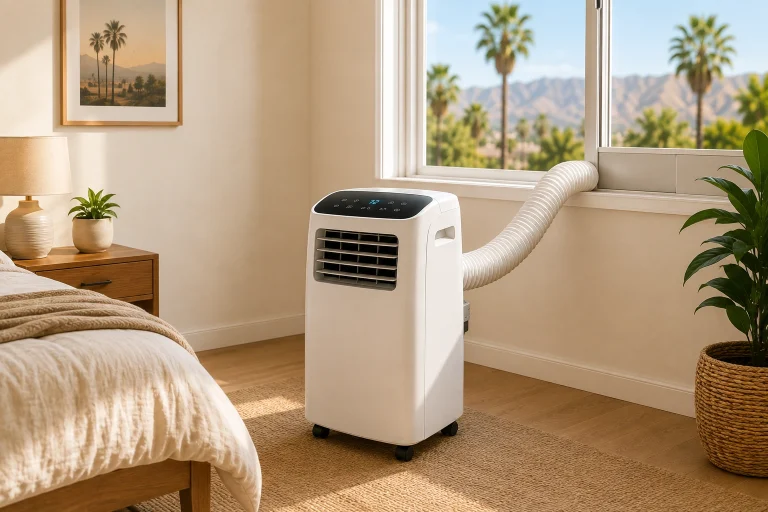
Portable ACs collect moisture from the air as they cool, then either evaporate it, store it in a tank, or drain it through a hose. In the San Fernando Valley, the best setup depends on how hot the room gets, how long the unit runs, and whether you want manual or continuous drainage.
If you’re trying to figure out portable ac water drainage how does it work, the short version is this: portable ACs pull moisture out of the air as they cool, and that water has to go somewhere. In San Fernando Valley homes, garages, and shaded outdoor-adjacent spaces, that drainage setup can matter more than people expect during long hot stretches.
The good news is that most portable ACs handle water in one of a few simple ways. Once you understand condensation, tank capacity, and drain options, it becomes much easier to choose the right unit for your bedroom, ADU, patio setup, or home office.
- How it works: Portable ACs remove humidity and create condensate water.
- Best for SFV heat: Continuous drain or pump support helps during long hot days.
- Dry climate note: Low humidity helps, but it does not eliminate drainage needs.
- Room fit matters: Bedrooms, garages, and patios need different drainage setups.
- Buy smarter: Look for auto-shutoff, drain access, and easy hose routing.
Understanding Portable AC Water Drainage in SFV Homes and Outdoor Spaces
Portable AC drainage is basically the process of collecting the moisture your unit removes from warm air. As the air cools, water condenses inside the machine, then either gets evaporated, stored in a tank, or sent out through a hose.
What “portable AC water drainage” means in real-world use
In everyday terms, drainage is just the AC’s way of dealing with the water it creates while cooling. If your unit is running in a dry bedroom, it may collect very little water. If it’s cooling a humid kitchen, laundry-adjacent room, or a space with frequent door openings, the tank can fill faster.
For San Fernando Valley residents, this matters because portable ACs are often used in rooms that are not perfectly sealed. A garage, side room, or covered patio enclosure can let in warm air, which can increase condensation and make drainage more noticeable.
Why San Fernando Valley heat makes drainage behavior more noticeable
The SFV is known for long, hot, sun-baked days, especially when heat waves settle in. Even when humidity is lower than coastal areas, a portable AC still has to work hard when a room is hot from afternoon sun exposure or poor insulation.
That extra runtime can mean more condensate buildup. So while the valley’s dry air may reduce drainage in some situations, it does not eliminate the need to manage water properly.
How Portable ACs Collect and Move Condensation
Portable ACs cool air by passing it over cold coils. Moisture in the air turns into water droplets on those coils, and the machine then moves that water into a tank, drain path, or evaporation system.
Self-evaporative systems vs. manual drainage models
Many portable ACs are marketed as self-evaporative, which means they reuse some of the collected water to help cool internal parts and push moisture out with warm exhaust air. That can reduce how often you need to empty the tank, especially in drier climates.
Manual drainage models collect water in an internal reservoir that you must empty when it fills. These are often simpler and sometimes more affordable, but they can require more attention during longer cooling sessions.
How humidity, runtime, and room size affect water buildup
Humidity is the biggest factor, but it’s not the only one. A larger room, a hotter room, or a unit that runs for hours at a time can all create more water buildup than you might expect.
That’s why a portable AC in a small office may barely need draining, while the same type of unit in a sun-exposed family room can fill a tank much faster. Runtime matters too: the longer the compressor runs, the more moisture it removes.
Where the water comes from in bedrooms, garages, patios, and kitchens
In bedrooms, moisture usually comes from normal indoor air and from opening the door. In garages, the source is often hot outside air leaking in through gaps, plus any humidity trapped from cars, tools, or stored items.
Kitchens can produce more moisture because of cooking, dishwashing, and frequent movement in and out of the space. On covered patios or semi-outdoor areas, the AC may be fighting both heat and outside air, which can make drainage more active than people expect.
What SFV Residents Need to Know About Drainage in Dry Heat and Heat Waves
The valley’s dry climate can be misleading. People sometimes assume a portable AC won’t produce much water here, but once a heat wave hits and the unit runs for hours, drainage becomes part of normal upkeep.
Why low humidity can reduce but not eliminate drainage needs
Lower humidity usually means less condensation, which is helpful. But portable ACs still remove moisture from the air, even in relatively dry conditions, especially when they’re cooling a space that has been baking in the sun all day.
If your unit is in a room with lots of afternoon heat gain, the air conditioner may run long enough to collect a meaningful amount of water. That’s true in many SFV apartments and single-family homes with west-facing windows.
Dry weather can slow water buildup, but it does not replace good drainage planning. A portable AC still needs a clear path for condensate, especially during heat waves.
How late-summer heat spikes change portable AC performance
Late-summer heat in the valley can push portable ACs into longer cycles and higher output. That usually means more condensation, more warm exhaust, and more strain on the unit overall.
If a portable AC is already near its limit for room size, drainage issues may show up sooner because the machine is working harder for longer. That is one reason sizing matters as much as drainage style.
Drainage considerations for apartments, ADUs, and single-family homes
Apartment renters often need a setup that is simple, contained, and easy to move without permanent changes. A small drain pan or a hose routed to a safe location may be more practical than a complicated setup.
ADUs and single-family homes may offer more flexibility, especially if there’s a floor drain, laundry area, or outdoor spot where water can be directed safely. Still, you want to avoid anything that creates slip hazards or causes runoff near neighbors’ property.
Drainage Setup Options for Everyday SFV Living
There is no single “best” drainage setup. The right choice depends on how often you use the unit, where it sits, and how much attention you want to give it during the week.
Manual emptying for small spaces and occasional use
Manual emptying works well for occasional cooling in a bedroom, guest room, or home office. If the unit only runs a few hours at a time, checking the tank once in a while may be enough.
This is the most straightforward option, but it can become annoying during heat waves or when you’re working from home and don’t want interruptions.
Continuous drain hoses for longer cooling sessions
A continuous drain hose lets water flow out of the unit instead of collecting in the tank. This is a strong option for all-day use, especially in rooms where you want fewer shutdowns.
It works best when the hose has a clear downward slope to a suitable drain point or collection container. If the hose runs uphill or gets kinked, the water can back up and trigger warnings.
Before you commit to a hose route, test it with the unit off. Make sure the hose stays downhill, doesn’t get pinched by furniture, and won’t be stepped on in a busy SFV household.
Using buckets, floor drains, or exterior runoff safely
Some homeowners use a bucket to collect drain water, especially in garages or utility areas. That can work fine as long as the container is stable and checked often.
Floor drains are ideal when available, but not every home has one in the right place. Exterior runoff can also work if it is directed safely away from walkways, foundations, and neighboring areas.
Never route drainage where it can create a slip hazard on a patio, pool deck, driveway, or garage floor. In the SFV, hot surfaces and water puddles can make accidents more likely.
Placement tips for garages, covered patios, and family rooms
In garages, keep the unit elevated only if the drain hose still slopes correctly and the machine remains stable. In covered patios, protect the unit from dust, smoke, and direct sun, which can affect performance and maintenance needs.
In family rooms, try to place the drain path where kids and pets won’t tug on it. A clean, hidden route is usually safer and less annoying for the whole house.
Comparing Portable AC Types for Water Management
Not all portable ACs handle water the same way. The type you choose can make a big difference in how often you drain it and how flexible the setup feels.
Single-hose vs. dual-hose units for Valley homes
Single-hose units are common and often easier to set up, but they can pull air from the room and create a slight negative pressure. That may increase warm air infiltration, especially in leaky spaces.
Dual-hose models usually handle room air more efficiently, which can help in larger SFV rooms or sun-exposed spaces. Better efficiency can also mean less runtime stress, though drainage still depends on humidity and use.
| Option | Best For | Note |
|---|---|---|
| Single-hose | Small rooms, renters, simple setups | Usually easier to move and install |
| Dual-hose | Larger rooms, hotter spaces, longer use | Can cool more efficiently in tough conditions |
| Self-evaporative | Busy households, lighter maintenance | May still need draining during heavy use |
| Manual drain | Budget buyers, occasional cooling | Simple, but requires more attention |
Portable ACs with built-in pumps vs. gravity drain models
Built-in pumps can move water upward or across a longer distance, which helps when a drain point is not directly below the unit. That can be useful in garages, upper-floor rooms, or tricky apartment layouts.
Gravity drain models are simpler and often quieter, but they need the drain outlet to sit lower than the unit. If you can manage that slope, they’re usually easy to live with.
Evaporative coolers vs. portable ACs in SFV outdoor-adjacent spaces
Evaporative coolers do not work the same way as portable ACs. They add moisture to the air instead of removing it, which can be a bad fit during humid spells or in enclosed spaces.
For outdoor-adjacent spots like open garages or covered patios, some people consider evaporative coolers because they seem simpler. But if you want actual dehumidifying cooling, a portable AC is the better match. For a broader breakdown of the machine itself, see our guide on how a portable air conditioner works.
Which models fit kitchens, home offices, and weekend car projects
Kitchens and home offices usually benefit from quieter, easy-to-drain models that won’t interrupt daily routines. If you work from home in the valley, a unit that can run steadily without constant tank checks is often worth more than the cheapest option.
For weekend car projects in the garage, durability and drain flexibility matter more. You may want a model that tolerates dust better and can handle longer runtime without constant babysitting.
For SFV buyers who split time between work-from-home weekdays and garage projects on weekends, a mid-range portable AC with a drain hose option is often the most practical all-around choice.
Common Drainage Problems and How SFV Families Avoid Them
Most drainage problems are not dramatic. They usually start with a hose that is bent, a tank that is forgotten, or a unit that is running harder than expected in a hot room.
Overflow, leaks, and shutdown warnings during long hot afternoons
Overflow warnings happen when the tank fills or the system senses a drainage problem. Some units shut off automatically, which is annoying but helpful because it prevents a bigger mess.
If you see repeated warnings during hot afternoons, check whether the unit is undersized, the filter is dirty, or the drain route is blocked. In the SFV, long afternoon heat can expose weak setups fast.
Why clogged hoses and poor slope cause issues in garages and patios
Dust, pet hair, and general garage debris can clog drain lines over time. On patios, hose routing can become messy if the line is too long or exposed to foot traffic.
Poor slope is another common problem. Even a good hose can fail if water has to travel uphill without a pump. That’s why placement matters as much as the unit itself.
Kid-safe and pet-safe drainage placement around busy households
If you have kids or pets, keep the drainage path out of walking lanes. A loose hose near a play area or hallway can get pulled, tripped over, or knocked loose.
Use containers with stable bases and avoid open puddle-prone setups. In busy homes, the safest drainage method is usually the one that requires the least daily handling.
Buying Tips for Portable AC Water Drainage in 2026
When shopping for a portable AC, don’t just look at cooling power. Drainage design can make the difference between a unit you enjoy and one you constantly babysit.
Features to look for: tank size, drain port access, auto-shutoff, pump support
Tank size matters if you plan to use the unit in a bedroom or office without a hose. Easy-access drain ports are helpful because they make maintenance less messy.
Auto-shutoff is worth having, especially for renters or anyone who may forget to check the tank. Pump support is a premium feature that can be very useful in awkward layouts.
Choosing the right unit for commuting routines, remote work, and weekend hosting
If you’re out commuting most of the day, a simple setup with auto-shutoff may be enough. For remote work, a continuous drain option can save time and reduce interruptions.
Weekend hosts may want something quieter and easier to manage, especially if guests will be moving through the same room. In that case, less maintenance usually beats a fancy feature list.
Energy use, noise, and maintenance tradeoffs for SFV buyers
More efficient units may cost more upfront, but they can be easier to live with during long valley summers. Noise also matters, especially in bedrooms and home offices where constant fan sound gets old fast.
Maintenance is part of the equation too. A simple drain system is often easier to clean, while pump-based systems may offer flexibility but add another component to maintain.
- How often you’ll run the AC
- Whether you want manual or continuous drainage
- How far the drain line needs to travel
- Whether kids, pets, or foot traffic are nearby
- How much noise and upkeep you can tolerate
How to match drainage style to your living setup and cooling habits
Match the drainage method to your routine, not just the room size. A renter in a small apartment may prefer a simple tank and auto-shutoff, while a homeowner cooling a garage or ADU may want a hose or pump.
Think about how often you’ll actually be there to empty a tank. If you’re away most of the day, a more automated drainage setup usually makes life easier.
Practical Recap: Choosing the Right Drainage Approach for San Fernando Valley Life
Portable AC drainage is simple once you break it down: the unit removes moisture, then stores it, evaporates it, or sends it out through a drain. The best setup depends on how hot your space gets, how long you run the unit, and how much maintenance you want to handle.
Best drainage setup by use case: bedroom, garage, patio, kitchen, or family room
For a bedroom, a self-evaporative unit or quiet tank model usually works well. For a garage, a gravity drain or pump-supported setup is often more practical because runtime tends to be longer.
For a covered patio or semi-outdoor space, focus on safe drainage routing and weather protection. For kitchens and family rooms, easy-access drainage and auto-shutoff can help keep things simple during busy days.
Simple takeaways for keeping portable ACs running smoothly during SFV heat
Choose a unit that fits your space, not just your budget. Keep the drain hose clear, check the tank during long hot spells, and avoid setups that create leaks or tripping hazards.
In the San Fernando Valley, the smartest drainage choice is usually the one that stays reliable through late-summer heat, busy routines, and those long afternoons when the house just won’t cool down on its own.
Recommended Products
SHOP THIS SETUP
Little Giant VCMA-20ULST Automatic Condensate Removal Pump
This condensate pump is a smart solution when a portable AC can’t drain by gravity, which is common in apartments, garages, and other SFV homes where the unit sits away from a floor drain or window outlet. It automatically moves collected water through a hose, helping prevent overflow and making portable AC use much easier during long, hot Valley summers.
Frequently Asked Questions
A portable AC removes moisture from warm air as part of the cooling process. That moisture turns into condensation and has to be stored, drained, or evaporated.
Yes, sometimes they do. Dry air can reduce water buildup, but long runtime and hot rooms can still create enough condensation to require draining.
Self-evaporative units reuse some of the collected water and usually need less frequent draining. Manual drain models store water in a tank that you empty yourself.
Yes, many portable ACs support continuous drainage through a hose. The hose usually needs a downward slope unless the unit has a built-in pump.
A full tank, clogged hose, poor slope, or blocked drain path can cause leaks or shutdown warnings. Dirty filters and oversized room loads can also make the problem worse.
A continuous drain hose or pump-supported model is often best for garages and patio-adjacent spaces. These setups are easier to manage during long hot days and frequent use.